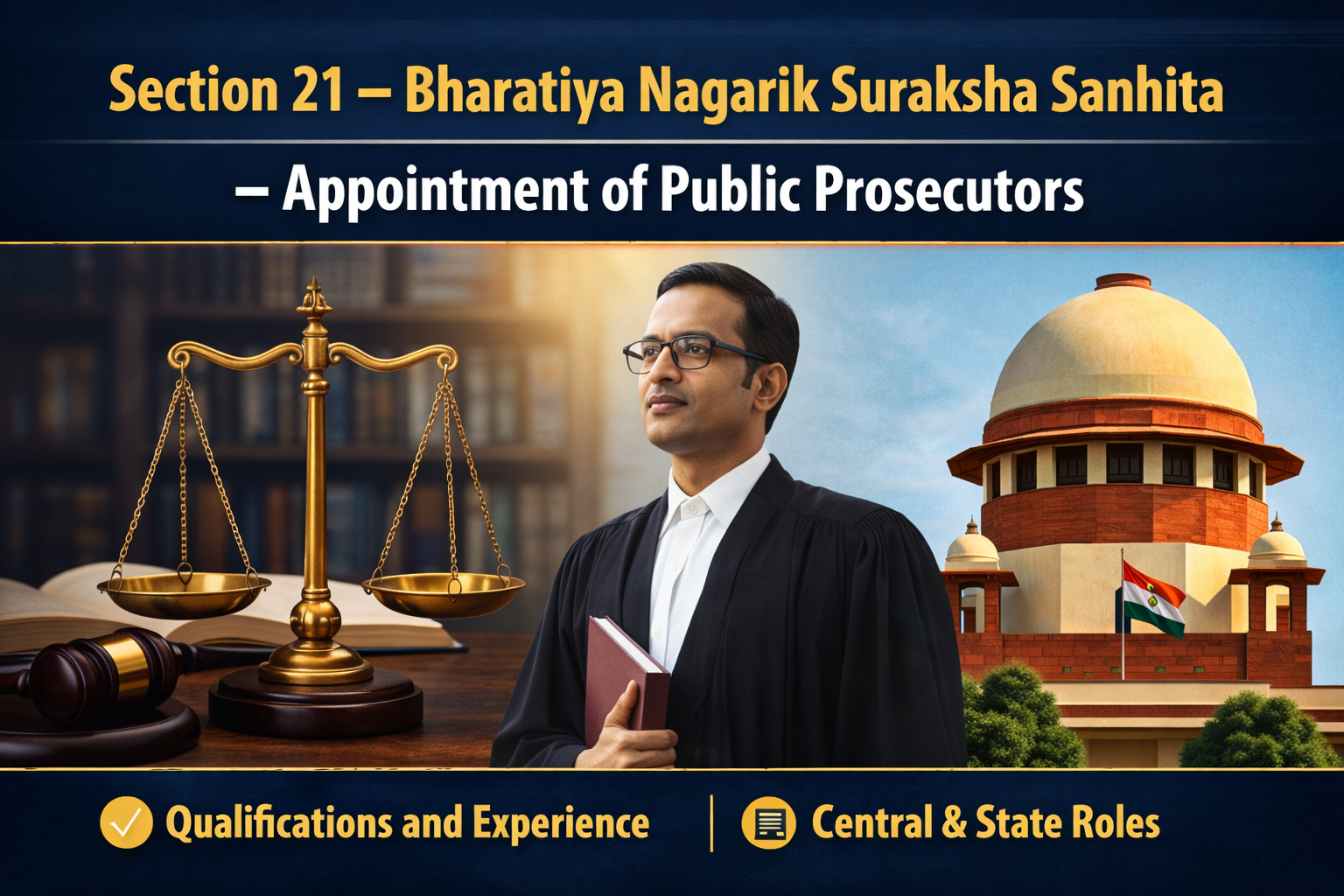
The Bharatiya Nagarik Suraksha Sanhita, 2023 (BNSS) has replaced the Criminal Procedure Code, 1973 (CrPC), which introduces new structural and procedural elements to the Indian criminal justice system. Section 21 BNSS – Appointment of Public Prosecutors, which establishes the process for selecting Public Prosecutors and Special Public Prosecutors, serves as a critical component that governs all aspects of criminal trial proceedings.
The prosecution system plays a central role in maintaining fairness during criminal trials. The complete criminal process requires a properly assigned Public Prosecutor because the absence of one leads to judicial procedure errors. This article provides an extensive explanation of Section 21 BNSS – Appointment of Public Prosecutors through its appointment process and eligibility requirements together with its current role in prosecutorial practice.
Section 21 BNSS – Appointment of Public Prosecutors establishes a new system which replaces Section 24 of the Criminal Procedure Code 1973 (CrPC).
Section 21 BNSS – Appointment of Public Prosecutors
The legal framework for appointing Public Prosecutors who will handle State prosecutions and appeals and all other criminal cases is established through Section 21 BNSS which designates the procedure for their appointment.
The State Government has the power to select Public Prosecutors and Additional Public Prosecutors who will represent the State during Sessions Court and criminal court proceedings under Section 21 of Bharatiya Nagarik Suraksha Sanhita.
The provision strengthens the Criminal prosecution system under BNSS by ensuring:
- Proper representation of the State in criminal matters
- Independence of prosecution from investigative agencies
- Fair conduct of trial
- Merit-based appointment from a panel of eligible advocates
1. State Government Power to Appoint Public Prosecutor
The core features of Section 21 BNSS – Appointment of Public Prosecutors lie in the recognition of the State Government’s power to appoint a Public Prosecutor.
Key Points:
- Public Prosecutors together with Additional Public Prosecutors receive their appointments from the State Government.
- The prosecution staff receive appointments for their work in Sessions Court trials.
- The Central Government has the authority to establish prosecutor positions for cases which central agencies investigate.
This structure ensures coordination between the executive and judicial branches while maintaining prosecutorial independence.
2. Panel of Advocates under Section 21 BNSS
The Panel of Advocates under Section 21 BNSS is crucial in maintaining transparency in appointments.
How It Works:
- The District Magistrate prepares a panel of eligible advocates.
- The panel is prepared in consultation with the Sessions Judge.
- Appointments are made from this approved list.
This consultation mechanism prevents arbitrary appointments and maintains judicial oversight in the Appointment of Public Prosecutor under BNSS.
3. Eligibility Criteria for Public Prosecutor BNSS
The Eligibility criteria for Public Prosecutor BNSS ensures that only experienced legal professionals handle criminal prosecutions.
Requirements:
- The advocate must have at least 7 years of practice at the Bar.
- The advocate must possess adequate experience in criminal law.
- The name must be included in the approved panel.
This provision guarantees competence and professional capability in conducting Prosecution in Sessions Court under BNSS.
4. Role of Public Prosecutor in BNSS 2023
The Role of Public Prosecutor in BNSS 2023 extends beyond merely presenting evidence.
Core Responsibilities:
- Conducting prosecution on behalf of the State.
- Presenting evidence fairly and objectively.
- Ensuring that justice is done, not merely securing conviction.
- Assisting the court in arriving at the truth.
- Filing appeals and revisions when required.
The Public Prosecutor under Bharatiya Nagarik Suraksha Sanhita is considered an officer of the court and must act independently of police influence.
The fairness of trials under the Criminal prosecution system under BNSS heavily depends on the ethical functioning of the Public Prosecutor.
5. Special Public Prosecutor under BNSS
Section 21 BNSS – Appointment of Public Prosecutors also provides for the appointment of a Special Public Prosecutor under BNSS.
When Appointed:
- In sensitive or complex criminal cases.
- In cases involving serious offences.
- In matters requiring specialized expertise.
The Special Public Prosecutor must have at least 10 years of practice as an advocate.
This ensures that high-profile and complicated cases are handled by senior professionals with deeper legal understanding.
6. District Public Prosecutor Appointment Process
The District Public Prosecutor appointment process is structured to maintain procedural integrity.
Process Overview:
- District Magistrate prepares a panel.
- Consultation with a Sessions Judge is mandatory.
- The State Government finalizes appointments.
- Notification is issued officially.
This process prevents favoritism and strengthens the credibility of BNSS 2023 Public Prosecutor provisions.
7. Prosecution in Sessions Court under BNSS
Under Section 21 BNSS – Appointment of Public Prosecutors, no prosecution in a Sessions Court can proceed without a duly appointed Public Prosecutor.
Importance:
- Sessions Courts deal with serious offences.
- Trials require procedural precision.
- Evidence presentation must follow strict legal standards.
The presence of a qualified prosecutor ensures that justice is not compromised due to procedural defects.
8. Safeguards and Accountability
The BNSS 2023 Public Prosecutor provisions introduce structural safeguards:
- Consultation with the judiciary.
- Minimum experience requirement.
- Defined appointment procedure.
- Provision for Special Public Prosecutors.
These safeguards ensure that the Public Prosecutor under Bharatiya Nagarik Suraksha Sanhita functions with integrity and professional responsibility.
9. Comparison with CrPC – What Has Changed?
As mentioned earlier, Section 21 BNSS – Appointment of Public Prosecutors replaces Section 24 of the Criminal Procedure Code, 1973.
Key Differences:
- Modernized drafting language.
- Clearer structure in appointment process.
- Greater emphasis on panel preparation.
- Reinforcement of judicial consultation.
Though the core framework remains similar, Section 21 Bharatiya Nagarik Suraksha Sanhita refines procedural clarity under the new legal regime.
10. Importance in the New Criminal Justice Framework
The introduction of Section 21 BNSS – Appointment of Public Prosecutors reflects the importance of strengthening the prosecution mechanism in India.
A strong and impartial prosecutor:
- Protects the rights of victims.
- Ensures fair trial for the accused.
- Maintains balance between investigation and adjudication.
- Upholds rule of law.
The Appointment of Public Prosecutor under BNSS is not merely administrative—it directly affects the quality of criminal justice delivery.
Conclusion
The criminal courts of Bharatiya Nagarik Suraksha Sanhita 2023 operate under Section 21 BNSS which establishes public prosecutor appointment procedures. The provision continues existing prosecution procedures through its replacement of Section 24 of the CrPC while it establishes additional protection measures.
The structured appointment mechanisms of Section 21 BNSS The Special Public Prosecutors system operates through established eligibility criteria and judicial consultation processes to guarantee criminal trials receive fair treatment and professional standards.
The successful implementation of BNSS Criminal prosecution system depends on how well its provisions are executed. The legal system requires a Public Prosecutor who possesses both competence and independence to protect constitutional rights and help maintain public trust.