The introduction of the Bharatiya Nyaya Sanhita marked a major reform in India’s substantive criminal law by replacing the colonial-era Indian Penal Code. Among the important General exceptions under BNS 2023, one significant provision is Section 14 BNS – Act Done by a Person Bound by Law.
This provision protects individuals from criminal liability when an act is done because the person is legally bound to do it, or when the person, due to a Mistake of fact under BNS, genuinely believes that he is bound by law to perform that act.
Understanding sub 14 of BNS-Act Done by a Person Bound by Law is critical since it lays down when criminal liability does not arise despite having technically satisfied an offence definition.
What is Section 14 BNS?
Section 14 BNS – Act Done by a Person Bound by Law provides that nothing is an offence which is done:
- By a person who is legally bound to do it, or
- The subject casteislaced more keystones and bigger blocks on top and stopped at less imagining where it could go.
The legal requirements of Section 14 BNS explain that a person who acts according to legal duties or his honest understanding of such duties based on actual facts will not face criminal charges.
This provision establishes a clear Criminal liability exception under BNS and protects lawful authority exercised in good faith.
Legislative Purpose Behind Section 14 BNS
The rationale behind Section 14 BNS – Act Done by a Person Bound by Law is rooted in fairness and justice.
1. Protection of Legal Duty
There are those, such as police officers, bureaucrats, and court officials, who are required by law to [go and] do things that would be seen as harmful in other situations. An Act done under legal obligation BNS should not attract punishment if done lawfully.
2. Recognition of Honest Mistake
The law recognizes that humans may commit factual errors. If an act is committed under a genuine Mistake of fact under BNS, criminal intent may be absent.
3. Prevention of Unjust Punishment
The provision protects individuals who perform their lawful duties or act in good faith from facing penalties because their actions produced results that seemed improper.
Essential Ingredients of Section 14 BNS
For protection under Section 14 BNS – Act Done by a Person Bound by Law, certain conditions must be satisfied:
1. Existence of Legal Obligation
The person must be legally bound by law. This includes statutory duties imposed by legislation or lawful authority.
Example:
- A police officer arresting a person under a valid warrant.
Here, the Act done under legal obligation BNS is protected.
2. Mistake of Fact, Not Mistake of Law
The protection applies only when there is a Mistake of fact under BNS.
Example:
- A police officer arrests the wrong person believing him to be the suspect named in the warrant.
However, ignorance of law is not excused. The Difference between mistake of fact and mistake of law is crucial:
- Mistake of fact → Excusable under Section 14 (if in good faith).
- Mistake of law → Not excusable.
3. Good Faith Requirement
The act must be done in Good faith action under Bharatiya Nyaya Sanhita. Good faith implies due care and attention.
If the person acts negligently or maliciously, protection may not apply.
Section 14 BNS – Act Done by a Person Bound by Law and Mistake of Fact Defense
Role of Good Faith
The Mistake of fact defense in criminal law requires:
- Honest belief
- Due diligence
- Absence of malice
- Reasonable care
Without good faith, Section 14 cannot be invoked.
Judicial Scrutiny
Courts examine:
- Whether the person was legally bound
- Whether belief was based on factual misunderstanding
- Whether due care was exercised
Thus, Section 14 BNS – Act Done by a Person Bound by Law does not provide blanket immunity.
Difference Between Mistake of Fact and Mistake of Law
Understanding the Difference between mistake of fact and mistake of law is essential under Section 14.
Mistake of Fact
- Based on incorrect factual understanding
- May excuse liability
- Requires good faith
Example:
- Arresting a person believing he matches the description of a suspect.
Mistake of Law
- Based on misunderstanding of legal provisions
- Not excused
- Ignorance of law is not a defense
Therefore, Section 14 BNS – Act Done by a Person Bound by Law applies only where factual misunderstanding exists.
Scope of Criminal Liability Exception Under BNS
The Criminal liability exception under BNS created by Section 14 is limited but powerful.
It applies to:
- Public servants
- Law enforcement officers
- Individuals performing statutory duties
- Private persons acting under legal compulsion
However, it does not protect:
- Malicious actions
- Acts done without due care
- Abuse of authority
Thus, Section 14 BNS – Act Done by a Person Bound by Law balances authority with accountability.
Comparison with Old IPC Provision
The earlier IPC had a similar provision under Section 76. However, the framework under the Bharatiya Nyaya Sanhita modernizes language and integrates it within updated statutory terminology.
The core principle remains the same: lawful duty and honest factual mistake negate criminal intention.
Practical Examples of Section 14 BNS
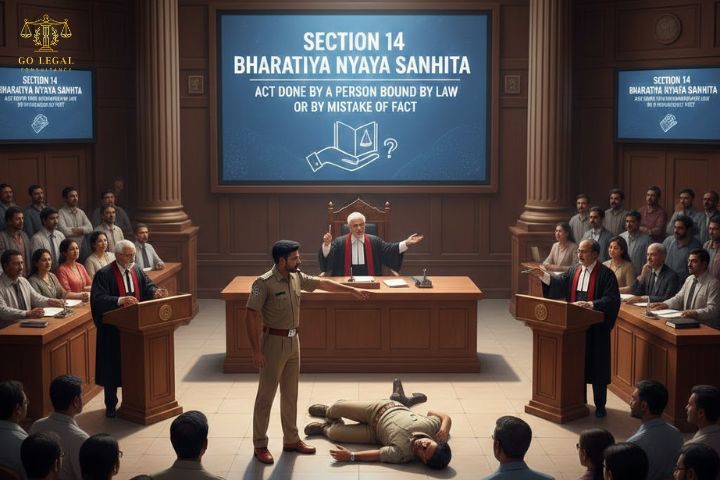
Example 1: Police Officer Executing Warrant
An officer executes a valid arrest warrant. The accused later claims wrongful confinement. If the officer acted lawfully, Section 14 BNS – Act Done by a Person Bound by Law protects him.
Example 2: Arrest Under Mistaken Identity
If the officer arrests a person believing in good faith that he is the named suspect, the Mistake of fact defense in criminal law may apply.
Example 3: Public Servant Acting Under Government Order
A revenue officer demolishes a structure under a lawful order. Even if the owner objects, the Act done under legal obligation BNS may not constitute an offence.
Importance in Criminal Justice System
The importance of Section 14 BNS – Act Done by a Person Bound by Law lies in its ability to:
- Protect lawful authority
- Maintain public administration
- Prevent harassment of officials performing duty
- Balance accountability with legal protection
It ensures that criminal law does not punish individuals for performing duties imposed by law.
Conclusion
Section 14 BNS – Act Done by a Person Bound by Law forms a vital part of the General exceptions under BNS 2023. It protects individuals who act under legal obligation or due to a genuine Mistake of fact under BNS, provided the action is done in good faith.
The provision clearly distinguishes between factual and legal errors and establishes a structured Criminal liability exception under BNS. By safeguarding Good faith action under Bharatiya Nyaya Sanhita, it preserves fairness within the criminal justice system while ensuring that misuse of authority does not go unchecked.
Ultimately, Section 14 BNS – Act Done by a Person Bound by Law reflects the principle that criminal liability requires wrongful intent, and where lawful duty or honest factual mistake exists, punishment is unjustified.
FAQ
Q1. What does Section 14 BNS provide?
It provides that an act done under legal obligation or under a mistake of fact in good faith is not an offence.
Q2. Does Section 14 apply to mistake of law?
No. Only Mistake of fact under BNS is protected. Mistake of law is not excused.
Q3. Who can claim protection under Section 14?
Public servants, police officers, and any person legally bound to act under law.
Q4. Is good faith mandatory?
Yes. Good faith action under Bharatiya Nyaya Sanhita is essential for invoking protection.
Q5. Why is Section 14 important?
Because it creates a structured Criminal liability exception under BNS, ensuring fairness and preventing unjust punishment.