
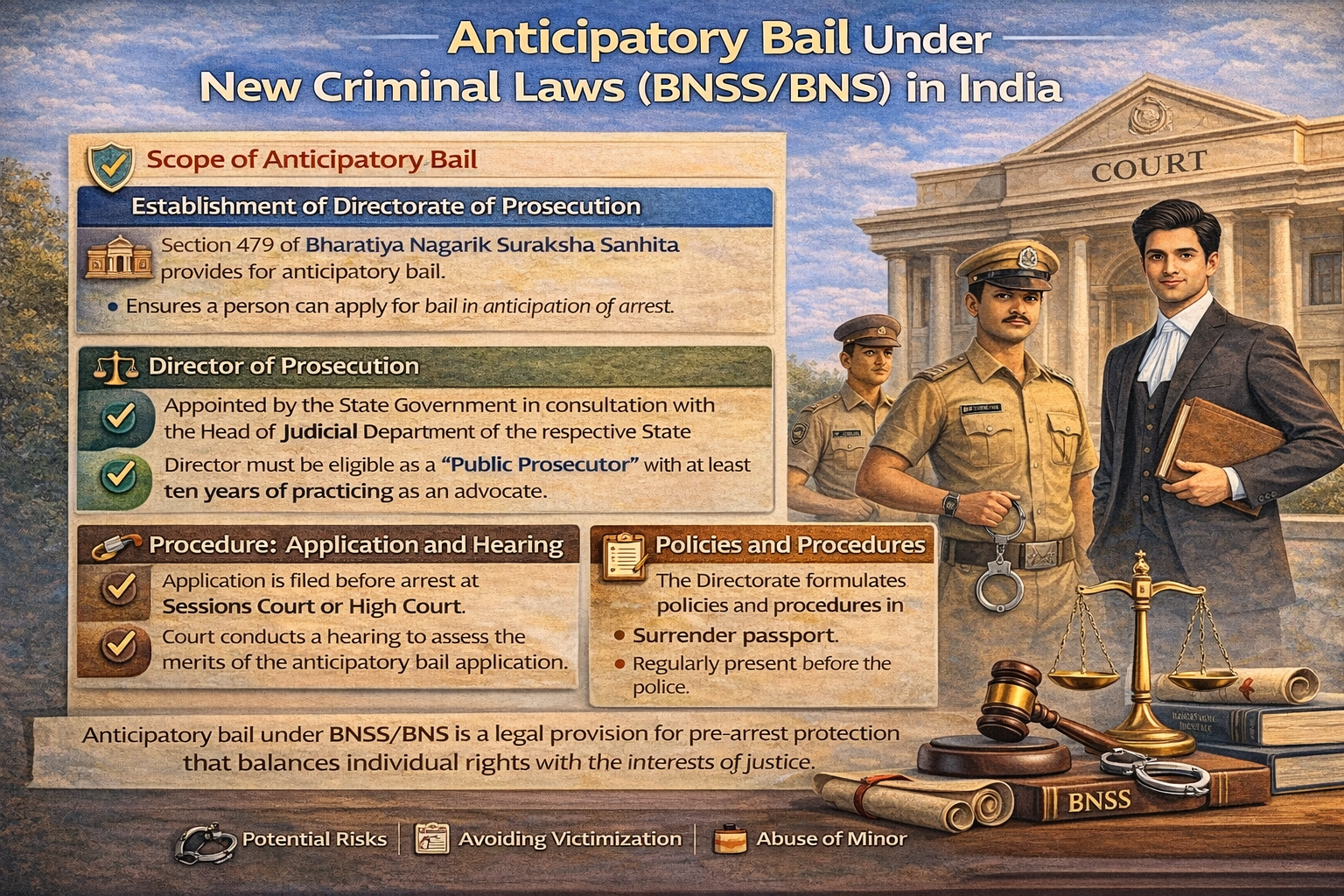
Anticipatory bail has existed as an essential legal option throughout the Indian criminal justice system, which allows people to protect themselves from arrest during criminal investigations. The introduction of BNSS and BNS has brought about a significant change to India’s criminal laws through its historic implementation. The new legal codes now include Anticipatory Bail as a judicial mechanism which enables courts to provide pre-arrest protection while maintaining the right of citizens and the obligations of law enforcement to perform their duties.
The article examines Anticipatory Bail in BNSS/BNS by presenting its essential elements together with its operational methods and the conditions needed for obtaining bail and how it affects defendants within India’s updated criminal justice system.
What is Anticipatory Bail?
Anticipatory Bail functions as a legal mechanism which enables individuals to request bail before they face arrest for a specific crime. The law exists to prevent arbitrary detentions while protecting rights under BNSS of all individuals.
Key Points:
- Pre-arrest Relief:The Pre-arrest bail system in India enables accused individuals to remain free until their official arrest occurs.
- Judicial Safeguard: The judicial system protects defendants through its process which evaluates case evidence before the courts decide on granting High Court Anticipatory Bail and sessions court orders.
- Applicability:The law applies to both cognizable and non-cognizable offenses according to the severity of the criminal act.
Section 43 BNSS: Bail Provisions
Section 43 BNSS establishes specific rules to handle Anticipatory Bail requests. The section gives courts authority to issue pre-arrest bail with specific conditions that prevent the accused from escaping legal proceedings.
Pointers Explained:
- Eligibility: The people accused of crimes under BNSS sections which carry criminal penalties can request anticipatory bail before their arrest.
- Conditions: The courts possess authority to enforce restrictions which include requirements for defendants to report to authorities at scheduled times and to remain within designated areas and to avoid any attempts at witness tampering.
- Judicial Oversight:.Authorities should consult the Director of Prosecution BNSS in serious cases to verify that bail conditions will not obstruct ongoing investigations.
Example Table: BNSS vs BNS Sections Related to Bail
| Section | Code | Provision | Notes |
| Section 43 | BNSS | Anticipatory Bail | Specifies pre-arrest bail procedures, conditions, and judicial oversight. |
| Section 47 | BNS | Bail Procedure | Defines eligibility criteria for bail in cognizable offenses under BNS. |
| Section 50 | BNSS | High Court Bail | Details jurisdiction for granting anticipatory bail to serious offenses. |
| Section 12 | BNS | Pre-arrest Bail India | Clarifies conditions and reporting requirements for pre-arrest bail. |
How to Apply for Anticipatory Bail
The course of seeking anticipatory bail under the new laws involves a structured process whereby it serves as a means for fairness under the Rights of accused under BNSS.
Step-by-Step Procedure:
- Filing an Application:
- File a petition in the relevant court before arrest.
- Include details of the alleged offense, personal background, and reasons for fearing arrest.
- Court Hearing:
- The court evaluates the criminal procedure BNSS to assess eligibility.
- Factors include the seriousness of the offense, prior criminal record, and the potential for tampering with evidence.
- Court Orders:
- If granted, the court may issue anticipatory bail with specific conditions and reporting obligations.
- High Court Anticipatory Bail is typically reserved for serious offenses under BNSS/BNS.
- Compliance:
- The accused must adhere to all conditions set by the court.
- Breach of conditions may lead to cancellation of bail and immediate arrest.
Rights of Accused Under BNSS
The Rights of accused under BNSS have been strengthened to ensure fair treatment during investigations and trials. Anticipatory Bail is a central mechanism in protecting these rights.
Key Rights Include:
- Right to pre-arrest bail to avoid unnecessary detention.
- Right to consult a lawyer before questioning.
- Right to ensure the Director of Prosecution BNSS does not misuse powers to oppose bail arbitrarily.
- Right to be informed about charges and the judicial process promptly.
Role of Director of Prosecution BNSS in Anticipatory Bail
The Director of Prosecution BNSS plays a significant role in cases involving serious offenses:
- Provides opinion on whether anticipatory bail should be granted in high-profile cases.
- Coordinates with law enforcement to ensure fair trial procedures.
- Monitors compliance with criminal procedure BNSS and protects victims’ and accused’s rights.
This ensures accountability and consistency in judicial decisions regarding pre-arrest bail.
Indian Criminal Justice Reform and Anticipatory Bail
The introduction of BNSS and BNS through its implementation marks a significant achievement for Indian criminal justice reform. The current system for Anticipatory Bail provides better transparency because it establishes definite procedures which restrict police power abuse while safeguarding citizen rights.
Benefits Include:
- Clear Guidelines: Anticipatory bail grants require courts to follow specific criteria which they have established.
- Reduced Arbitrary Arrests: The legal system protects citizens from wrongful detention.
- Streamlined Prosecution:Prosecutors who work for BNSS follow established procedures when they handle bail applications through their two main tasks of bail opposition and bail monitoring.
Practical Considerations for Applicants
Before applying for Anticipatory Bail, applicants should consider:
- Nature and gravity of the offense.
- Whether the case falls under Section 43 BNSS or BNS bail provisions.
- Compliance with court conditions once bail is granted.
- The potential role of the Director of Prosecution BNSS in serious cases.
High Court Anticipatory Bail
For serious or high-profile cases, applicants may approach High Court Anticipatory Bail:
- The period of reserved offenses which carry 7 to 10 years of imprisonment requires punishment under BNSS/BNS regulations.
- The courts require extra documents which include proof of residence and an assurance that the person will not obstruct the investigation process.
- The High Court establishes legal precedents which lower courts must follow when they handle similar anticipatory bail applications.
Conclusion
The Indian judicial system uses Anticipatory Bail under New Criminal Laws (BNSS/BNS) to protect citizens from unlawful police detentions. The Section 43 BNSS and criminal procedure BNSS guidelines and Director of Prosecution BNSS supervision provide people with complete legal protections through established legal processes.
The present system protects Rights of accused under BNSS while simultaneously allowing law enforcement agencies to conduct their investigations and courts to perform their judicial oversight. The Indian Criminal Justice Reform process will maintain anticipatory bail as a fundamental element that supports justice and fairness and accountability throughout its entire duration.
FAQs on Anticipatory Bail Under BNSS/BNS
1. What is Anticipatory Bail?
Anticipatory Bail is a legal provision allowing an individual to seek bail before being arrested for an alleged offense. Under BNSS/BNS, it safeguards the rights of accused under BNSS and ensures protection from arbitrary detention.
2. How is Anticipatory Bail different from regular bail?
Regular bail is sought after arrest, whereas Anticipatory Bail is applied before arrest. It acts as a Pre-arrest Bail India mechanism to avoid unnecessary imprisonment.
3. Which section covers Anticipatory Bail in BNSS?
Section 43 BNSS outlines the rules and procedures for granting pre-arrest bail, conditions imposed by the court, and judicial oversight.
4. Who can grant High Court Anticipatory Bail?
The High Court can grant Anticipatory Bail in serious offenses punishable under BNSS/BNS, typically when the offense involves imprisonment of 7–10 years or more.
5. How to apply for Anticipatory Bail?
To apply:
- File a petition in the competent court before arrest.
- Include details of the alleged offense, personal information, and reasons for fear of arrest.
- The court evaluates the application based on criminal procedure BNSS.