
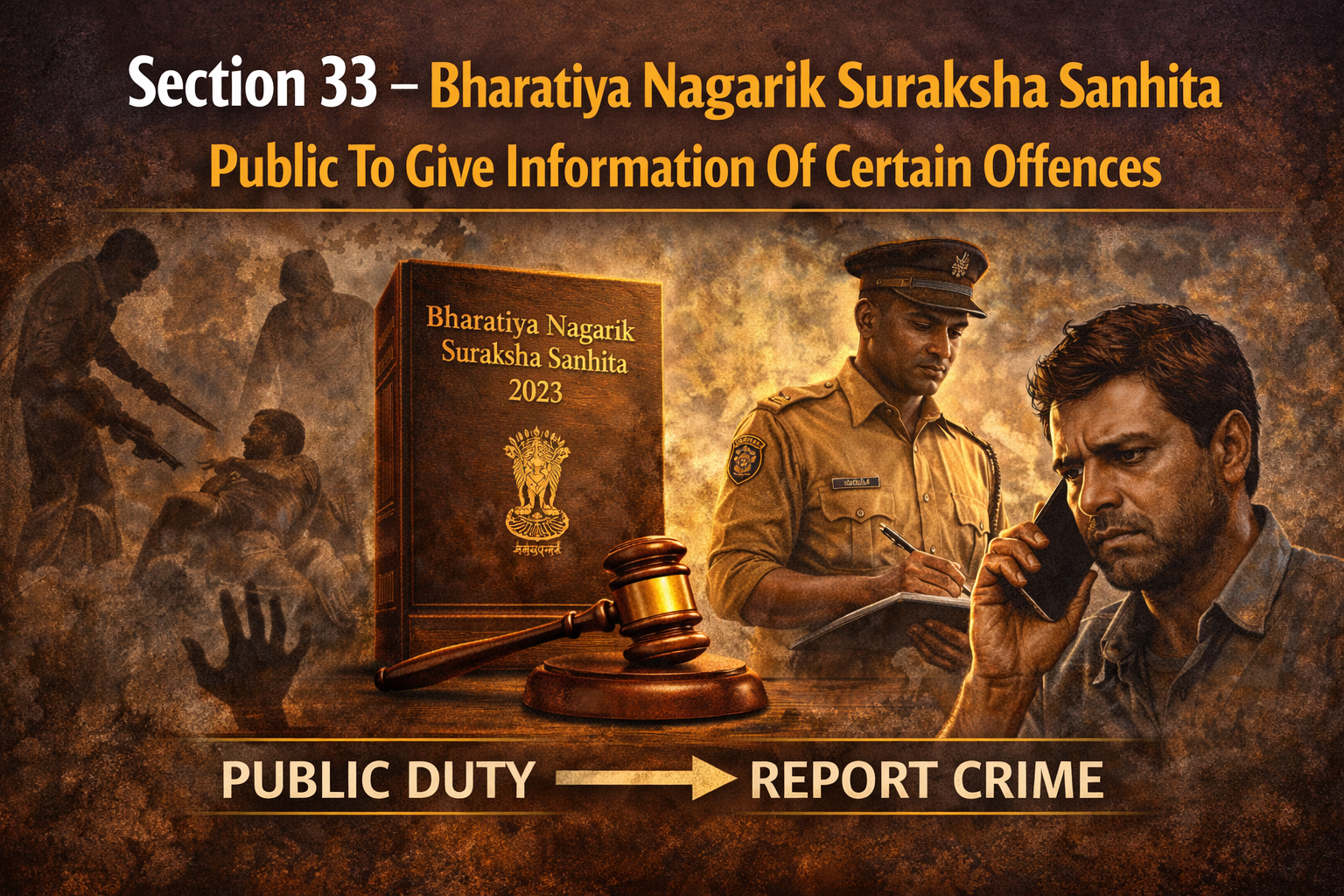
The Bharatiya Nagarik Suraksha Sanhita of 2023 introduced substantial structural changes to India’s criminal procedure system. The new legislation established a criminal justice system which maintained essential elements from the previous Code of Criminal Procedure 1973.
One vital part of this framework exists through Section 33 of the Bharatiya Nagarik Suraksha Sanhita, 2023. The provision titled Section 33 BNSS – Public to Give Information of Certain Offences establishes a legal responsibility for citizens to inform authorities about certain serious crimes. The law recognizes that effective policing requires both police agencies and public cooperation to function.
The rule under Section 33 BNSS – Public to Give Information of Certain Offences ensures that individuals who become aware of serious criminal acts must report such information to the nearest police officer or magistrate. The provision establishes an early reporting system which enables authorities to either prevent criminal activities or respond instantly to emergencies.
The Section 33 Bharatiya Nagarik Suraksha Sanhita explanation shows the legal obligation of people to report crimes which demonstrates how citizens help the criminal justice system through their involvement.
Meaning of Section 33 BNSS – Public to Give Information of Certain Offences
The rule established under Section 33 BNSS. Public to Give Information of Certain Offences. requires every person who learns about serious offences being committed or planned to report that information to the nearest magistrate or police officer.
This is consistent with the public duty to inform BNSS regarding police that is legally imposed upon citizens when they happen to become aware of the kind of criminal activity occurring.
Key Idea Behind the Provision
The law protects public safety because it requires reporting all crimes against public safety. The law enforcement agencies can stop crimes and catch criminals when people provide them with information about criminal activities.
This rule is commonly referred to as the public reporting crimes rule in BNSS, which ensures that society actively participates in maintaining law and order.
The Section 33 BNSS explained approach shows that criminal justice is not solely the responsibility of police forces but also a collective duty shared by citizens.
Types of Offences Covered Under Section 33 BNSS Legal Provision
The Section 33 BNSS legal provision applies only to specific serious offences where public awareness can help prevent harm.
1. Offences Against the State
Certain crimes that threaten national security fall within the scope of the relevant offences information rule BNSS.
Examples include:
- Conspiracy against the government
- Terrorist activities
- Acts threatening public safety
When a person becomes aware of such acts, the citizen’s obligation to inform police about offences becomes mandatory.
2. Serious Violent Crimes
Another category covered under Section 33 BNSS – Public to Give Information of Certain Offences includes major violent offences.
Examples include:
- Murder
- Kidnapping
- Robbery
- Organized criminal activities
In these situations, the criminal procedure duty to report offences ensures that authorities receive information quickly so that the crime can be prevented or investigated.
3. Crimes That Threaten Public Safety
Certain offences may not directly involve violence but still pose serious risks to society.
Examples include:
- Planned riots
- Large-scale fraud
- Illegal arms possession
- Human trafficking
The information of serious offences to police law ensures that such crimes do not remain undisclosed.
Importance of Section 33 BNSS in Criminal Law
The Section 33 Bharatiya Nagarik Suraksha Sanhita explanation highlights why this rule plays a crucial role in maintaining public order.
1. Strengthening Law Enforcement
The police cannot monitor every activity in society. The BNSS duty of public to inform authorities allows law enforcement agencies to receive valuable information from citizens.
This improves the ability of police officers to prevent criminal acts.
2. Prevention of Serious Crimes
Many crimes can be stopped before they occur if authorities receive early warnings. The certain offences reporting law in India encourages people to share information that could prevent serious harm.
For example, if someone learns about a planned robbery or attack, reporting it immediately can help authorities stop the crime.
3. Promoting Public Responsibility
The public duty to inform police BNSS creates a sense of responsibility among citizens. It emphasizes that maintaining law and order is a shared duty.
By imposing the legal duty of citizens to report crime BNSS, the law ensures that people cannot remain silent when they have knowledge of serious offences.
Section 33 BNSS Examples in Criminal Law
Understanding Section 33 BNSS examples in criminal law can help clarify how the rule works in real situations.
Example 1: Planned Robbery
Suppose a person overhears a group planning a robbery in a local market.
If that individual fails to report the information to police authorities, they may violate the public to give information of certain offences BNSS rule.
However, reporting the information helps authorities take preventive action.
Example 2: Knowledge of Kidnapping Plot
If someone becomes aware that a kidnapping is being planned and fails to inform the police, they may fail to fulfill the criminal procedure duty to report offences.
Reporting such information allows law enforcement to intervene before the crime occurs.
Role of Courts in Applying Section 33 BNSS Explained
When courts interpret Section 33 BNSS explained, they examine whether the person:
- Had knowledge of a serious offence
- Failed to provide information to authorities
- Intentionally withheld information
Courts also analyze whether the person had a reasonable opportunity to inform the police.
The relevancy of the public reporting crimes rule in BNSS becomes important when determining whether a citizen neglected their legal duty.
Old Section 39 CrPC Comparison
Before the enactment of the BNSS, the same principle existed under Section 39 of the Code of Criminal Procedure, 1973.
Provision Under the Old Law
Section 39 of the CrPC required citizens to report certain serious offences such as murder, robbery, or offences against the state.
The provision established the citizen obligation to inform police about offences when they had knowledge of such crimes.
Continuity in the New Criminal Procedure Law
The principle has been retained under Section 33 BNSS – Public to Give Information of Certain Offences.
While the numbering has changed, the legal idea remains largely the same. The Old Section 39 CrPC comparison shows that the BNSS continues the long-standing rule that citizens must assist authorities in preventing serious crimes.
This continuity ensures that the information of serious offences to police law remains an important part of the criminal justice system.
Conclusion
The section 33 BNSS Public to Give Information of Certain Offences establishes an essential pathway for citizens to engage with the criminal justice system. The provision requires all citizens who learn about major criminal activities to report their findings to police agencies.
Through the principles discussed under Section 33 BNSS explained, public duty to inform police BNSS, and legal duty of citizens to report crime BNSS, the law establishes that maintaining public safety is a shared responsibility.
The rule also continues the earlier legal framework under Section 39 of the Code of Criminal Procedure, ensuring consistency within Indian criminal procedure law. By encouraging citizens to report serious offences, Section 33 BNSS – Public to Give Information of Certain Offences helps authorities prevent crime and protect society.