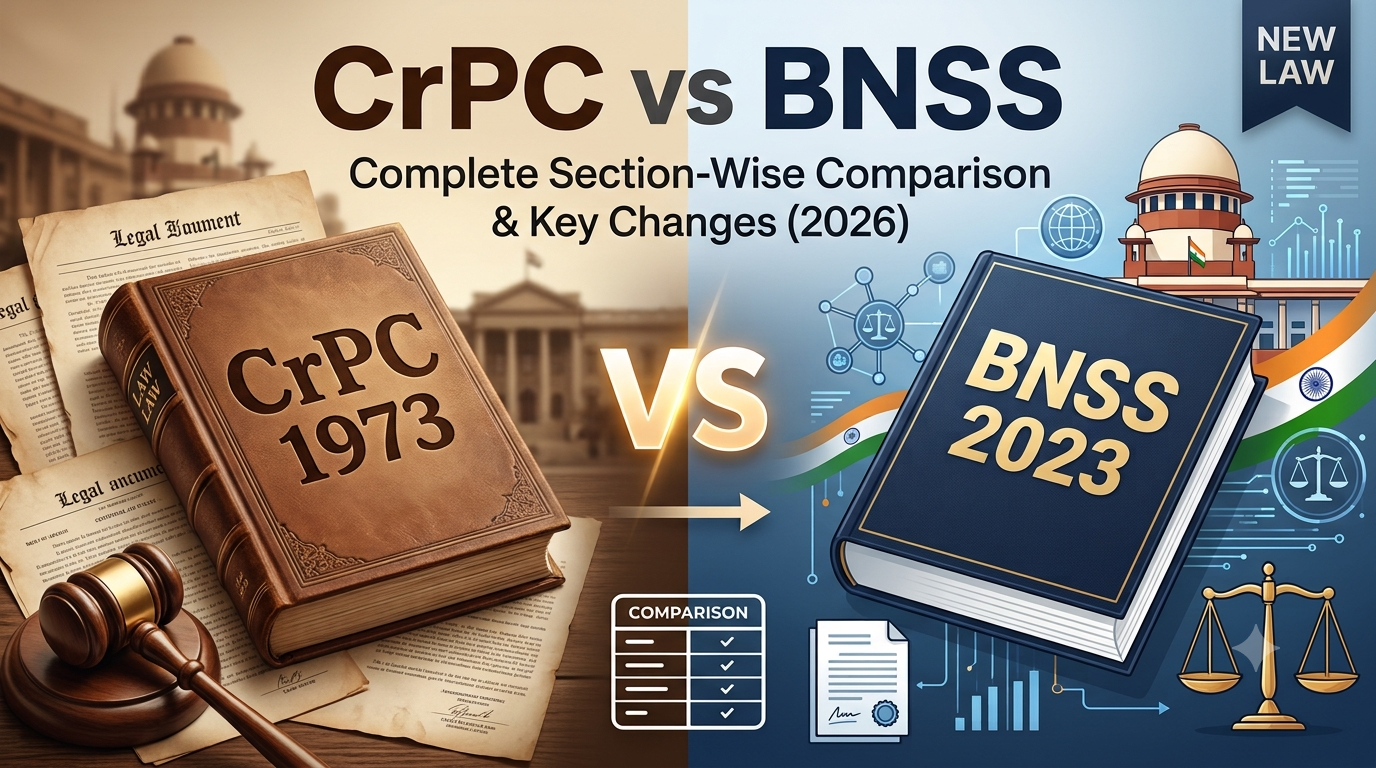

With the transition from the Code of Criminal Procedure, 1973 (CrPC) to the Bharatiya Nagarik Suraksha Sanhita, 2024 (BNSS), these deadlines and the procedural framework governing default bail have been re-encoded. Understanding them is essential for every defence lawyer, judicial officer, and accused person in India.
What Is Default Bail Under BNSS 2024?
Default bail is a constitutional and statutory remedy available to an accused who has been detained in custody while the investigating agency fails to complete its investigation and file a charge-sheet (called a police report) within the time prescribed by law. It is not a discretionary relief — it is an indefeasible right that arises by operation of statute.
Under Section 187 of the BNSS 2024 (which replaces Section 167 of the CrPC), the Magistrate may authorise detention of an accused during investigation for a maximum period of 60 or 90 days, depending on the gravity of the offence. Once that period expires without a charge-sheet being filed, the accused is entitled to be released on bail — provided they furnish the required surety.
The Supreme Court of India has consistently held that this right, once it accrues, cannot be taken away merely because the charge-sheet is filed moments or days after the accused applies for default bail. The MP High Court’s recent ruling reinforces this position in the context of BNSS 2024.
What Are the Statutory Deadlines for Filing a Charge-Sheet?
The timelines under Section 187 BNSS 2024 mirror those previously found in Section 167(2) CrPC, with minor structural changes in language. The key deadlines are:
- 90 days — where the investigation relates to an offence punishable with death, imprisonment for life, or imprisonment for a term of not less than ten years.
- 60 days — in all other cases.
If the charge-sheet is not filed within these periods, the Magistrate shall — not may — release the accused on bail, subject to the accused furnishing bail. The use of mandatory language is deliberate and has been upheld repeatedly by the Supreme Court.
What Did the Madhya Pradesh High Court Actually Decide?
The Madhya Pradesh High Court, examining a petition where the charge-sheet was filed after the expiry of the statutory period, held that the right to default bail had already accrued to the accused on the date of expiry of the deadline. The belated filing of the charge-sheet did not and could not nullify a right that had crystallised by that point.
The Court emphasised that where an accused applies for default bail before or immediately upon expiry of the statutory period, the Magistrate is obligated to consider and grant that application — and cannot defer or deny it on the ground that a charge-sheet has since been filed. This is consistent with the Supreme Court’s ruling in M. Ravindran v. Intelligence Officer, Directorate of Revenue Intelligence (2021), which firmly established the indefeasible nature of default bail.
The judgment serves as a critical reminder to trial courts that procedural default by the investigating agency cannot be used to indefinitely detain an undertrial accused.
How Is Default Bail Different From Regular Bail?
Understanding the distinction matters because the legal standards and procedures are different:
- Regular bail (under Sections 478–483 BNSS 2024) is discretionary — the court weighs factors like flight risk, criminal antecedents, and the nature of the offence.
- Default bail (under Section 187 BNSS 2024) is a statutory entitlement — once the conditions are met, the court has no discretion to refuse it if the accused is willing to furnish surety.
- Default bail can be cancelled if the charge-sheet is subsequently filed and the court is satisfied, but only prospectively — the initial grant cannot be reversed retroactively.
What Must an Accused Do to Claim Default Bail?
Claiming default bail is a time-sensitive exercise. Here is what an accused or their counsel must do:
- Monitor the custody period — Track the date of first remand and calculate the 60 or 90-day window precisely.
- File a bail application before the charge-sheet is taken on record — The application must be filed after the statutory period expires but before the Magistrate formally takes cognizance of any charge-sheet the police may file late.
- Assert the right explicitly — The application should clearly invoke Section 187 BNSS 2024 and state that the statutory period has lapsed without a charge-sheet.
- Be ready to furnish surety — Default bail is not granted automatically without the accused expressing willingness to furnish bail and providing sureties.
- Challenge any denial promptly — If the Magistrate refuses default bail incorrectly, file a revision or writ petition before the High Court without delay.
Can the State Defeat Default Bail by Filing the Charge-Sheet Late?
No — and this is the core finding the MP High Court has reinforced. The Supreme Court in Sanjay Dutt v. State through CBI, Bombay (1994) and subsequent cases has made clear that once the right accrues and the accused applies for bail, a late-filed charge-sheet does not extinguish that right. The investigating agency cannot use deliberate delay and a last-minute filing to circumvent a fundamental statutory protection.
Courts have also held that even a technical filing — such as submitting an incomplete or preliminary charge-sheet just to stop the clock — may not suffice if it does not comply with the requirements of a complete police report under Section 193 BNSS 2024.
How Does BNSS 2024 Change the Default Bail Landscape?
The BNSS 2024, which came into force on 1 July 2024, re-codifies the law of criminal procedure. For default bail purposes, the substantive rights remain largely intact from the CrPC era, but practitioners must note:
- Section numbers have changed — Section 187 BNSS replaces Section 167 CrPC. Cite the correct provision in applications filed after 1 July 2024.
- The definition of a police report now appears in Section 2(1)(t) BNSS — ensure the document filed by police meets this definition before conceding that the right has been extinguished.
- Digital and electronic submission of charge-sheets is now contemplated — courts are beginning to grapple with when exactly such a filing is deemed complete for the purpose of the default bail clock.
Lawyers practising criminal law must update their procedural muscle memory to cite BNSS provisions in all matters arising from offences investigated on or after 1 July 2024.
Why This Ruling Matters for Undertrial Prisoners in India
India has one of the highest proportions of undertrial prisoners globally. According to the National Crime Records Bureau (NCRB), undertrials constitute over 75% of India’s prison population. Default bail is a critical constitutional safeguard — rooted in Article 21 of the Constitution — that prevents the State from using investigative delay as a tool of indefinite detention.
The MP High Court’s ruling is a timely affirmation that courts will not permit procedural manipulation to override a fundamental right. Every undertrial who has been in custody for 60 or 90 days without a charge-sheet being filed has a right that deserves to be exercised — and defended vigorously.
“The right to default bail is not a concession by the State — it is an indefeasible statutory entitlement that accrues by operation of law the moment the investigation timeline expires.”
Disclaimer: This article is intended for general legal information purposes only and does not constitute legal advice. Laws and judicial interpretations may evolve. For advice specific to your matter, consult a qualified advocate.
Frequently Asked Questions on Default Bail Under BNSS 2024
What is default bail under BNSS 2024?
Default bail under BNSS 2024 is a statutory right under Section 187 that entitles an accused to be released on bail if the police fail to file a charge-sheet within 60 days (for most offences) or 90 days (for serious offences punishable with death, life imprisonment, or 10+ years). It is not discretionary — it is an indefeasible right triggered automatically by the expiry of the statutory period.
Which section of BNSS 2024 governs default bail?
Section 187 of the Bharatiya Nagarik Suraksha Sanhita, 2024 governs default bail. It replaces Section 167(2) of the Code of Criminal Procedure, 1973 (CrPC) and applies to all offences investigated on or after 1 July 2024.
Can a late charge-sheet defeat the right to default bail?
No. The Madhya Pradesh High Court, consistent with Supreme Court precedent, has held that a charge-sheet filed after the expiry of the statutory period cannot extinguish the right to default bail that has already accrued — provided the accused has applied for bail before the late charge-sheet is formally taken on record by the Magistrate.
Is default bail the same as regular bail?
No. Regular bail is discretionary and depends on factors like flight risk and the gravity of the offence. Default bail is a statutory entitlement — courts must grant it once the conditions under Section 187 BNSS 2024 are satisfied and the accused is willing to furnish bail. The court has no discretion to refuse it.
What happens if a Magistrate wrongly refuses default bail?
If a Magistrate incorrectly refuses default bail, the accused can challenge the order by filing a Criminal Revision or a Writ Petition (Habeas Corpus) before the relevant High Court. Given the constitutional dimension of the right under Article 21, High Courts have consistently intervened in such cases without delay.
Does default bail apply to NDPS or special legislation cases?
Special legislations like the NDPS Act, PMLA, and UAPA may have modified or extended timelines and additional conditions for bail. The default bail framework under BNSS 2024 applies generally, but courts examine the interplay between Section 187 BNSS and the specific provisions of each special act. Legal advice for such cases is strongly recommended.