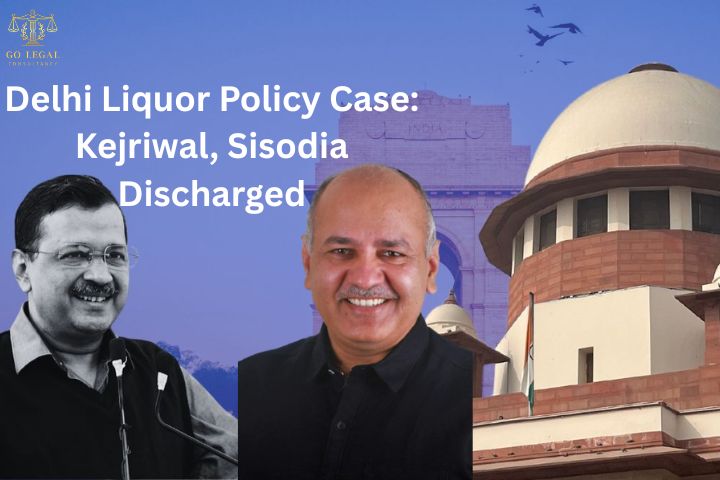
The Rouse Avenue Court in New Delhi delivered a historic judgment on February 27, 2026 which led to the release of all 23 defendants in the Delhi Liquor Policy Case that the Central Bureau of Investigation (CBI) had investigated. Special Judge Jitendra Singh issued the landmark decision when he declined to establish criminal charges against all defendants including former Chief Minister Arvind Kejriwal and former Deputy Chief Minister Manish Sisodia in this politically sensitive criminal case which has been one of the most important cases in India during recent times.
The Delhi Liquor Policy Case court issued a discharge order which contained strong criticism of the CBI according to the judge who found that the CBI chargesheet showed serious flaws and internal inconsistencies and lacked trustworthy evidence. The judgment established that proof of corruption and criminal conspiracy allegations required concrete evidence which should not rely on speculation or politically driven stories.
What Was the Delhi Liquor Policy Case?
The Delhi Liquor Policy Case originates from the 2021-22 Delhi Excise Policy which the Aam Aadmi Party AAP government implemented under Chief Minister Arvind Kejriwal. The policy aimed at restructuring the capital’s liquor trade through a transition from a government-operated system to a completely private retail distribution model which would generate more state revenue while decreasing illegal liquor operations.
The Lieutenant Governor Vinay Kumar Saxena recommended a CBI investigation into the policy creation and execution process after the Delhi Chief Secretary issued a July 2022 report which detailed alleged financial irregularities and procedural errors. The CBI registered an FIR alleging that the policy was deliberately manipulated to favour select private entities — specifically, a cartel referred to as the ‘South Group’ — in exchange for alleged kickbacks worth approximately Rs 100 crore.
Key Timeline of the Delhi Liquor Policy Case
- November 2021: The new excise policy is in effect in Delhi Government for 2021-2022.
- July 8, 2022: A report received by the Delhi Chief Secretary alleges several gross violations in the implementation.
- July 22, 2022: It has been recommended by the chief justice or the High Court for the CBI to carry out an investigation into the Delhi Liquor Policy case .
- August 19, 2022: Raid Conducted at Manish Sisodia’s Home, Office By CBI.
- August 22, 2022: The Enforcement Directorate (ED) has registered money laundering cases built under Prevention of Anti Money Laundering Act in relation to the alcohol policy.
- February 26, 2023: Manish Sisodia arrested by CBI, who spends about 530 days in jail.
- June 26, 2024: Arvind Kejriwal was arrested by CBI while in ED custody—has spent nearly 156 days behind bars.
- February 27, 2026: The Rouse Avenue Court drops all the 23 accused in the Delhi Liquor Policy Case.
What the Court Said: Key Findings Against the CBI
The court’s order in the Delhi Liquor Policy Case delivered a clear and complete condemnation of the investigation work. The CBI investigation showed basic defects which Special Judge Jitendra Singh discovered through his examination of the CBI investigation.
No Prima Facie Case Against Manish Sisodia
The court declared that the CBI failed to establish a primary case against Manish Sisodia. The evidence presented against Sisodia who the police identified as the main architect of the Delhi Excise Policy proved insufficient to establish his involvement in any criminal activities. The court determined that Sisodia had not generated any criminal profits and there were no existing documents to show his participation in any conspiracy activities.
Kejriwal Implicated Without Cogent Material
The court made a specific observation about Arvind Kejriwal which showed that he had been charged in the Delhi Liquor Policy Case because the evidence against him remained insufficient. The judge stated that laws protect people who hold or held constitutional post from being accused without the existence of valid evidence. The court established that Kejriwal only appeared in the fourth supplementary chargesheet because he did not participate in the original FIR or the first three chargesheets of the case.
Voluminous Chargesheet, Zero Supporting Evidence
The most important discovery that the Delhi Liquor Policy Case court uncovered showed that the CBI chargesheet which contained thousands of pages documented information which included incorrect statements that had no basis in any witness statements or filed documents. The judge observed that a chargesheet of such volume would ordinarily be expected to contain overwhelming material — instead, it contained internal contradictions that struck at the very foundation of the alleged criminal conspiracy theory.
Use of Approver Statements to Fill Gaps
The court raised major doubts about the way CBI built its case through its use of approver statements in the Delhi Liquor Policy Case. The judge pointed out that the practice of using an accused person as an approver for witness testimony which grants the accused a pardon should not be permitted because it creates dangerous violations of constitutional rights and defendant rights.
Departmental Inquiry Ordered Against CBI Investigating Officer
The court in the Delhi Liquor Policy Case took an exceptional action by ordering a departmental inquiry to be conducted against the CBI’s Investigating Officer (IO) who handled the case. The court found that the investigative process had failed because investigators made errors which went beyond normal procedural mistakes.
The court issued departmental inquiry orders because it determined that the CBI their investigation of the Delhi Liquor Policy Case through handling which failed to meet basic requirements of an established investigative organization.
All 23 Accused Discharged — Complete List
The discharge order in the Delhi Liquor Policy Case applies to all 23 accused persons named in the CBI’s chargesheet. The court found that no sufficient grounds existed to frame charges against any of them.
- Kuldeep Singh – He was called the first accused while there wasn’t any material against him at all as stated by the court.
- Manish Sisodia – Former Deputy Chief Minister, A.A.P.; stayed in jail for a whopping 530 days.
- Arvind Kejriwal – He is a former Chief Minister of Delhi, who spent about 156 days in jail.
- K. Kavitha – He is a former Chief Minister of Delhi, who spent about 156 days in jail.
- Vijay Nair – Former head of communications of the Aam Aadmi Party was arrested in September 2022.
Abhishek Boinpally, Arun Pillai, Mootha Gautam, Sameer Mahendru, Amandeep Singh Dhall, Arjun Pandey, Butchibabu Gorantla, Rajesh Joshi, Damodar Prasad Sharma, Prince Kumar, Arvind Kumar Singh, Chanpreet Singh, Durgesh Pathak, Amit Arora, Vinod Chauhan, Ashish Chand Mathur, Sarath Reddy, and Narender Singh.
Legal Arguments: How the Defence Secured Discharge
The defence teams presented multiple legal challenges to the CBI chargesheet in the Delhi Liquor Policy Case. Senior Advocate N. Hariharan and Advocate Mudit Jain appeared for Kejriwal, while Senior Advocate Rebecca M. John and Advocate Vivek Jain represented Sisodia.
- No incriminating evidence: The defence maintained that there was no direct evidence which connected Kejriwal or Sisodia to any corrupt activities or criminal conspiracy in the Delhi Liquor Policy Case.
- Lateness of implication: Kejriwal was only included in the fourth chargesheet—his non-mention in the initial FIR and the first three chargesheets signified the on-a-second-thought indictment strategy.
- Absence of financial trail: The Delhi Liquor Policy Case has no evidence connecting the accused to the alleged kickbacks because there was no financial evidence nor any bank records to prove their involvement.
- Policy as a legitimate government decision: The defence maintained that the Delhi Excise Policy from 2021 to 2022 represented an official exercise of executive authority which created policy through its legitimate implementation.
- Reliance on unreliable witnesses: The CBI’s main witnesses including approvers provided testimony which their main witnesses provided which showed their main witnesses provided which they testified to without any supporting evidence.
Reaction After the Verdict in the Delhi Liquor Policy Case
The Delhi Liquor Policy case reached its peak moment of emotional tension and political conflict during the discharge order. Outside Rouse Avenue Court Arvind Kejriwal broke down in tears when he declared “Kejriwal is not corrupt. The court has said today that Kejriwal, Manish Sisodia, and AAP are honest.” He explained that the case represented the most significant political conspiracy ever to occur in independent India.
Manish Sisodia spent the longest period of time in detention for the Delhi Liquor Policy Case. He spent about 530 days in detention. He showed his emotional feelings to his relatives and AAP leaders. AAP leaders Sanjay Singh Saurabh Bharadwaj and Gopal Rai declared the verdict as proof that their party had been wrongly accused.
What Next? The ED Case Still Continues
The CBI’s Delhi Liquor Policy Case ends at the trial court through the discharge order yet the ED’s money laundering case active under the Prevention of Money Laundering Act (PMLA) continues to proceed. The CBI case discharge does not bring all legal matters related to the Delhi Liquor Policy Case to an automatic conclusion.
- There is an option for the CBI to challenge the discharge order before the High Court of Delhi.
- The Enforcement Directorate’s separate case under the Prevention of Money Laundering Act against the same offender is not affected by the court’s order granting discharge in CBI’s case.
- The CBI Court has so ordered that the departmental inquiry against the CBI’s Investigating Officer will run independently.
Significance of the Discharge Order in the Delhi Liquor Policy Case
The CBI Court has so ordered that the departmental inquiry against the CBI’s Investigating Officer will run independently.
- Judicial scrutiny of investigative agencies: The court’s harsh observations show that Indian courts will not automatically accept chargesheets which central agencies present because investigations need to be supported by actual evidence.
- Protection of constitutional office-holders: The court found that Kejriwal acted as chief minister during his official term because there was no evidence to support his alleged involvement in the case. The court’s decision established that constitutional officeholders need credible evidence before they can be accused of wrongdoing.
- Rule of law over political compulsions: The verdict establishes that the Delhi Liquor Policy Case and similar cases need to be resolved through examination of factual evidence rather than through assessment of political narratives.
- Accountability of investigative agencies: If we consider the IO responsible, then the departmental inquiry conducted against him is this indication: Responsibility hits both sides; it is not merely for the accused.
Conclusion
The discharge of Arvind Kejriwal, Manish Sisodia, and all 23 accused in the Delhi Liquor Policy Case marks a watershed moment in Indian legal and political history. The Rouse Avenue Court established three key points which proved the CBI chargesheet contained internal contradictions and showed no primary evidence for criminal conspiracy while linking both Kejriwal and Sisodia to the case without any substantial proof.
The Delhi Liquor Policy Case has consumed years of legal battles, cost central political leaders their freedom for extended periods, and kept the public in India discussing the matter. The verdict serves as a major judicial turning point because it established Indian judicial independence yet the ED investigation and CBI appeal process remain active. The court demonstrated that corruption allegations need to have evidence as their base requirement. Proof requires actual evidence which cannot be replaced by conjecture or political pressure or the amount of information presented.