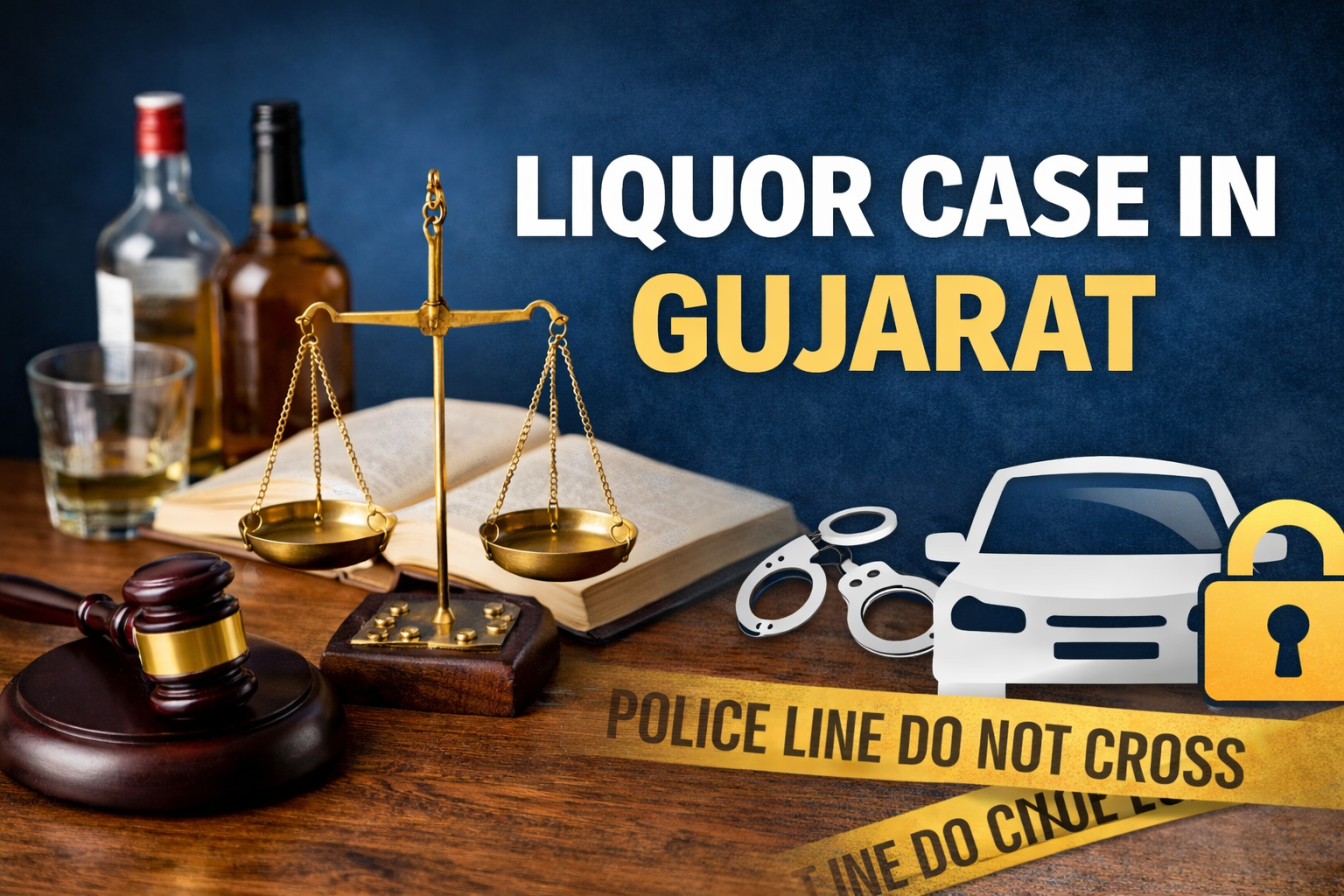
Gujarat is one of the few Indian states where alcohol is completely prohibited. The law treats all liquor-related activities as criminal offences which include possession, transportation, sale, and consumption. A Liquor Case in Gujarat results in police arresting suspects while they confiscate property and establish strict conditions for bail which they must meet.
The legal framework of liquor offences needs to be understood because bail is not granted automatically to defendants. This article presents a comprehensive analysis of the Liquor Case in Gujarat through its examination of prohibition law bail types procedural protections and defendant rights.
Liquor Case in Gujarat: Legal Background
The Gujarat Prohibition Act 1949 controls all aspects of prohibition in Gujarat. The law establishes complete prohibition of alcohol consumption while granting officials broad authority to make arrests and confiscate property.
The authorities in Liquor Case in Gujarat as major offenses that go beyond simple regulatory breaches. The courts process bail applications with careful consideration because the case involves a charge that violates public order and moral standards.
Liquor Prohibition Law in Gujarat
Key Features of Prohibition Law
The Liquor prohibition law in Gujarat criminalises:
- Manufacture of alcohol
- Sale or purchase of liquor
- Transportation or storage
- Possession and consumption
Sections 65 and 66 Gujarat Prohibition Act
Most Commonly Invoked Provisions
In a typical Liquor Case in Gujarat, FIRs usually include:
- Sections 65 and 66 Gujarat Prohibition Act
- Section 65 deals with illegal possession, transport, sale, or manufacture
- Section 66 penalises consumption of liquor and entering Gujarat after consumption
Depending on facts such as quantity and role of the accused, these sections may result in a Non-bailable liquor offence Gujarat.
Nature of Offence: Bailable vs Non-Bailable
Bailable vs non-bailable offences
- Minor violations involving small quantities may be treated as bailable
- Larger quantities, repeat offences, or allegations of organised activity are often non-bailable
In a Liquor Case in Gujarat, the classification of the offence plays a decisive role in determining whether bail is a right or a matter of discretion.
Arrest in Liquor Prohibition Case
Police Powers and Legal Position
Arrest in liquor prohibition case can take place without a warrant if the officer believes an offence has been committed. Arrest is often accompanied by:
- Seizure of liquor
- Detention of vehicle
- Registration of FIR
Although arrest powers are wide, they are still subject to constitutional safeguards.
Procedure After Liquor FIR
Step-by-Step Legal Process
After registration of FIR in a Liquor Case in Gujarat, the procedure generally involves:
- Production of the accused before a Magistrate
- Application for police or judicial custody
- Filing of bail application
- Investigation and filing of charge sheet
Understanding the Procedure after liquor FIR helps the accused take timely legal steps.
Bail in Liquor Case Gujarat
Types of Bail Available
The law recognises multiple forms of bail in a Liquor Case in Gujarat, depending on the stage of proceedings.
Anticipatory Bail in Liquor Case
Anticipatory bail in liquor case is sought when there is an apprehension of arrest. Courts examine:
- Nature of allegations
- Quantity of liquor involved
- Past criminal record
- Cooperation with investigation
Anticipatory bail is discretionary and often granted with conditions.
Regular Bail in Liquor Case
Regular bail in liquor case is applied for after arrest. Courts consider:
- Length of custody
- Progress of investigation
- Possibility of tampering with evidence
- Risk of absconding
Regular bail decisions balance enforcement of prohibition laws with personal liberty.
Default Bail in Liquor Case
Default bail in liquor case arises when the investigating agency fails to file a charge sheet within the statutory period.
- 60 days for less serious offences
- 90 days for serious offences
If the charge sheet is not filed within time, the accused gains a statutory right to bail.
Charge Sheet Delay and Bail
Legal Consequences of Delay
Charge sheet delay and bail are closely connected. The legal position is clear:
- Delay beyond statutory period gives rise to default bail
- The right must be exercised before filing of charge sheet
- Courts cannot deny bail once the right has accrued
This safeguard prevents prolonged detention without trial.
BNSS Bail Provisions and Liquor Cases
The BNSS bail provisions retain the principles of earlier criminal procedure while clarifying timelines and custody limits.
Key aspects include:
- Clear statutory limits for investigation
- Recognition of default bail as a legal right
- Emphasis on procedural fairness
In a Liquor Case in Gujarat, BNSS provisions ensure accountability of investigating agencies.
Vehicle Seizure in Liquor Case
Seizure as Case Property
Vehicle seizure in liquor case is common where transportation is alleged. Vehicles are treated as case property and may remain in custody during trial.
Courts examine:
- Ownership of the vehicle
- Knowledge of the owner
- Use of the vehicle in offence
Muddamal Confiscation Gujarat
Confiscation Proceedings Explained
Muddamal confiscation Gujarat refers to confiscation of seized property such as vehicles or liquor. Important points include:
- Confiscation is not automatic
- Separate legal procedure may apply
- Knowledge and involvement must be established
Confiscation proceedings are independent of bail decisions.
Punishment Under Gujarat Prohibition Act
Penal Consequences
Punishment under Gujarat Prohibition Act may include:
- Imprisonment
- Heavy fines
- Confiscation of property
Severity of punishment often influences whether bail is granted or denied.
Rights of Accused in Liquor Case
Constitutional and Legal Safeguards
Even in a Liquor Case in Gujarat, the accused enjoys important rights:
- Right to legal representation
- Right to be produced before Magistrate
- Right against illegal detention
- Right to seek bail
These rights flow from Article 21 and apply regardless of the nature of offence.
Judicial Approach to Liquor Bail Matters
Courts consistently hold that:
- Bail is the rule, detention is the exception
- Pre-trial custody should not be punitive
- Each case must be decided on its own facts
Even under strict prohibition laws, liberty cannot be curtailed mechanically.
Conclusion
The Liquor Case in Gujarat operates through three components: statutory regulations, enforcement authority, and criminal penalties. The Gujarat Prohibition Act 1949 treats liquor offences as grave crimes, which directly affects arrest, seizure, and bail.
However, legal safeguards such as Bail in liquor case Gujarat, Default bail in liquor case, and BNSS bail provisions protect personal freedom from being taken away without legal procedures. People need to understand prohibition law and their procedural rights together with bail mechanisms because this knowledge will help them handle liquor-related criminal cases in a legal and effective manner.