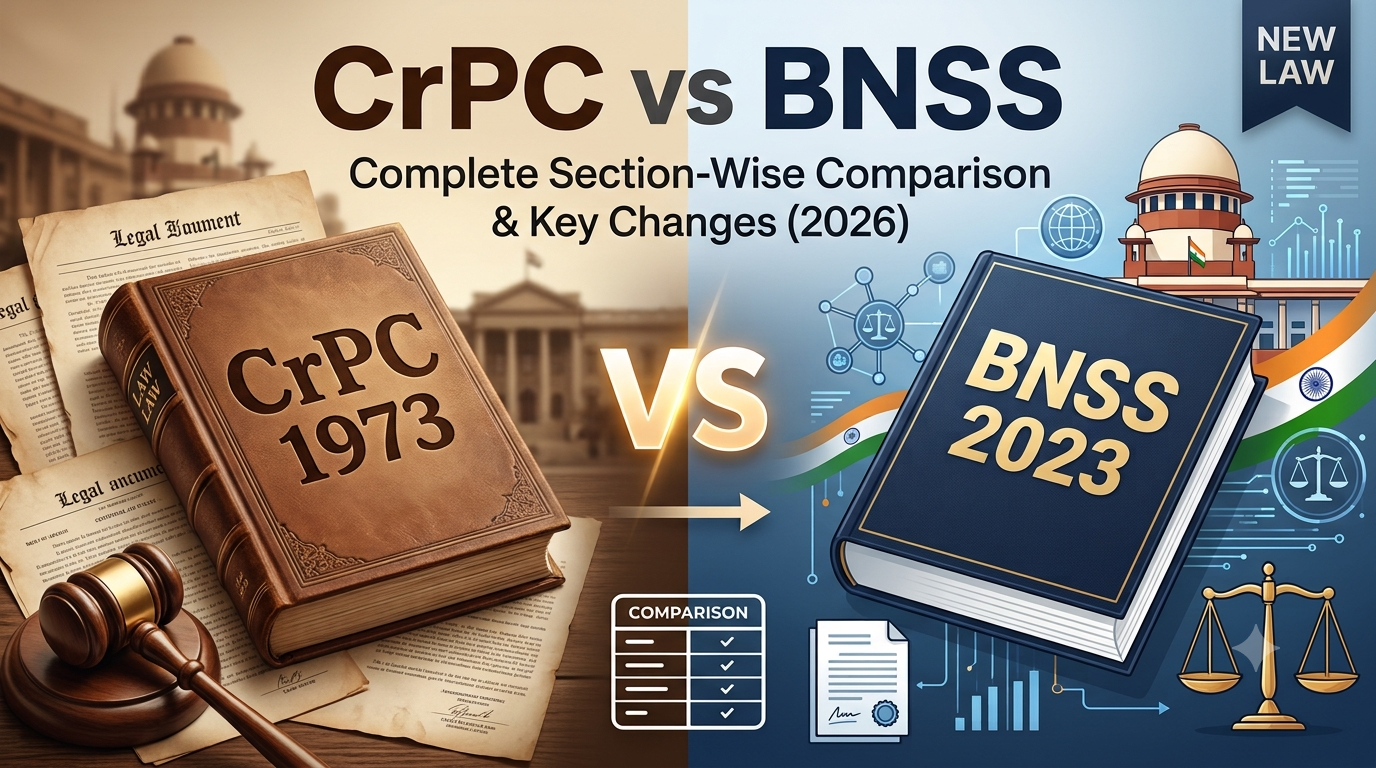
The year 2023 has been a significant milestone in the criminal justice system of India with the arrival of the Bharatiya Nagarik Suraksha Sanhita (BNSS). This law has done away with the Code of Criminal Procedure, 1973 (CrPC). The aim of BNSS is to overhaul the existing criminal procedures ensuring they are no longer complex, opaque, lengthy, and unfriendly to the citizens, but instead, very simple, transparent, quick, and fully based on citizens’ rights.
This article in a very straightforward manner tells all about BNSS, reasons for its introduction, and the main points that differentiate BNSS from CrPC..
What Is BNSS?
BNSS (Bharatiya Nagarik Suraksha Sanhita), 2023 is the new criminal procedure law in India. It covers every step in the criminal process—from the reporting of an offence to the investigation, arrest, bail, trial, and appeal.
The law is meant to facilitate clear, fast, and time-bound procedures for the police, prosecutors, courts, and the public.
BNSS’s primary concern is not just crime control; it also puts stress on citizen’s safety, rights protection, and prompt justice.
Why Was BNSS 2023 Introduced?
The CrPC, 1973 completed almost 50 years of existence. Gradually, people, crimes, and technology underwent major transformations, but laws governing procedures stayed old-fashioned. This situation caused a number of problems:
- Criminal case proceedings took an unreasonably long time
- Nothing was clear about digital evidence
- Police actions were not very open
- The rights of victims were not taken into account in the judicial process
BNSS was the solution planned to rectify these issues and to bring forth a fast, modern, and accountable criminal justice system.
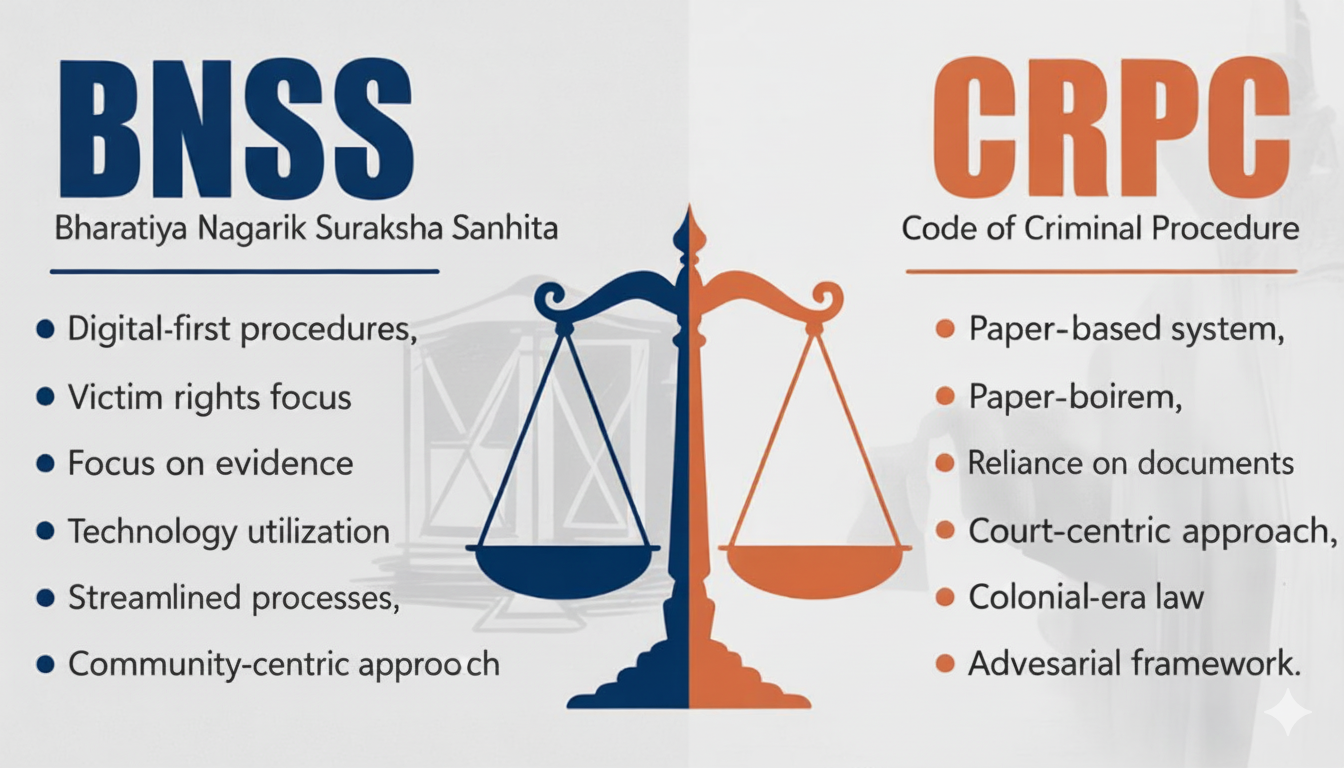
BNSS vs CrPC – Key Differences
1. Emphasis on Digital Procedures
Under the CrPC regime, most procedures were paper-based. BNSS legally recognizes:
- Online registration of FIRs
- Electronic summons and notices
- Digital records and video conferencing
2. Time-Bound Investigation and Trial
BNSS prescribes clear timelines for several stages of investigation and trial to ensure faster disposal of cases.
3. Strengthening Victims’ Rights
Under CrPC, the role of victims was limited. BNSS strengthens victims’ rights by ensuring:
- Right to receive information
- Right to know the status of investigation
- Participation in the justice process
4. Clarity in Arrest and Bail Provisions
BNSS clearly defines rules related to arrest and bail, helping prevent arbitrary arrests and safeguarding personal liberty.
Impact of BNSS on Common Citizens
The biggest beneficiaries of BNSS are ordinary citizens. Key benefits include:
- Easier registration of FIRs
- Greater transparency in police procedures
- Protection against unnecessary arrests
- Improved chances of speedy justice
The law now focuses not only on offenders but also on the safety, dignity, and rights of citizens.
New Roles of Police and Courts
Under the BNSS, police departments are given accountability in return for the adoption of modern technologies and the like.
Digital tools become available to the court system and the latter gets a more substantial role in overseeing cases and delivering speedy justice in turn.
Key Objectives of BNSS
- Reducing delays in the justice system
- Promoting victim-centric procedures
- Establishing a technology-driven justice system
- Ensuring uniform and clear legal interpretation
- Protecting fundamental rights of citizens
Frequently Asked Questions (FAQs)
1. When was BNSS implemented?
BNSS was enacted in 2023 and replaced the CrPC.
2. Has CrPC been completely repealed?
Yes, BNSS has replaced the Code of Criminal Procedure.
3. Is it important for common citizens to know about BNSS?
Yes. BNSS directly affects rights related to arrest, FIR registration, and bail.
4. Does BNSS recognize digital evidence?
Yes, BNSS legally recognizes digital and electronic evidence.
Conclusion
The Bharatiya Nagarik Suraksha Sanhita (BNSS) is a landmark move in the direction of modernizing the criminal justice system in India. Not just a procedural reform, but a transformation of the concept of justice.
BNSS, by eliminating the weaknesses of the CrPC, gives a fair and strong structure for all parties concerned: citizens, victims, police, and courts. The next years will see the BNSS building blocks for a quicker, clearer, and even more dependable justice system in India.