The contemporary world driven by knowledge has made the most invaluable assets of commerce and society to be ideas, innovations, creative content, and brand identity. Intangible assets consisting of Intellectual Property Rights (IPR) are protected by law through the guaranteed exclusivity as well as the monetary rewards awarded to the creators, inventors, and businesses themselves. Due to the very fast technology improvements, -among which are the digital platforms, AI, and the world market- IPR has turned out to be more complex and important than ever before.
In this instance, the essay presents an all-embracing and up-to-date inspection of IPR with a particular concentration on copyright and patent laws, their legal frameworks, practical implications, contemporary developments, and global trends.
1. Understanding Intellectual Property Rights (IPR)
1 Definition and Core Purpose
Intellectual Property Rights (IPR) are a term that describes the rights granted by law to the owners of original works and inventors who hold patents. By means of their rights, the owners are able to prevent, without their consent, the use, reproduction, sale, or any kind of exploitation of their products by others.
The fundamental objectives of IPR are:
- To motivate people to come up with new ideas and think outside the box
- To give back for putting money into research, art, and tech
- To raise competition and boost economy in a just way
- To protect the moral and economic rights of the authors
IPR transforms ideas into legally enforceable assets, enabling monetization, licensing, and commercialization.
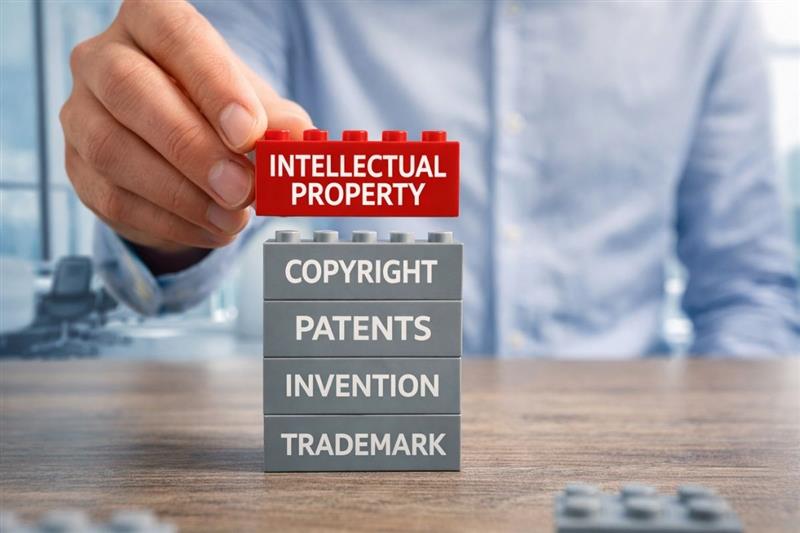
2. Major Categories of Intellectual Property Rights
Intellectual Property Rights encompass a variety of legal protections. The primary categories include:
- Copyright
- Patent
- Trademark
- Industrial Designs
- Geographical Indications
- Trade Secrets
- Plant Variety Protection
While this article focuses on copyright and patents, understanding their relationship with IPR as a whole provides context for legal interpretation and strategic protection.
3. Copyright Law: Protecting Creative Expression
1 What Is Copyright?
Copyright is a legal right that secures the original creative works that are made tangible and expressed in that medium. Copyright, unlike patents, grants protection merely to the expression of ideas and not to the ideas themselves. The copyright law coverage is extended to literature, arts, music, cinema, and the digital realm of creations.
2 Legal Framework
The Copyright Act, 1957 governs copyright in India which has been amended several times to cover digital content, online platforms, and new technologies. At the global level, India has adhered to the Berne Convention, therefore, providing joint protection with other members.
3 Works Protected Under Copyright
- Printed publications (books, articles, journals)
- Music and audio recordings
- Movies, videos, and multimedia
- Visual arts (paintings, drawings, and sculptures)
- Computer programs, software, and databases
- Digital and online media
4 Duration of Protection
- Authors/creators: Lifetime + 60 years (after death)
- Movies and recordings: 60 years starting from publication
- Anonymous or company works: 60 years starting from publication
5 Rights Conferred
Copyright grants authors exclusive rights to:
- Make a reproduction of the work.
- Distribute copies thereof
- Perform it in public, or display it in public
- Make any translations and revisions of the work.
- To communicate the work in the digital format (for instance, online streaming or downloads).
6 Copyright in the Digital Age
The rise of YouTube, podcasts, e-books, and online art selling platforms has turned the issue of digital infringement into one of the major enforcement problems. Digital rights management (DRM), takedown notices under intermediary liability rules, and AI-generated content are some of the concepts that are shaping the current copyright discussion.
4. Patent Law: Safeguarding Technological Innovation
1 What Is a Patent?
Patents represent a type of intellectual property rights that protect technological innovations, whether as a new product or a different method of doing something or a new solution to a technical problem.
A patent grants the inventor the sole right to stop anyone from making, using, selling, or importing the invention without his/her consent.
2 Legal Framework
The Patents Act 1970 is the governing legislation in India for patents, later on, amended to comply with the TRIPS (Trade-Related Aspects of Intellectual Property Rights) treaty under the WTO.
3 Criteria for Patentability
An invention must meet three primary criteria:
- Novelty – It should be the first time ever worldwide.
- Inventive Step – Not clear to a professional in the art.
- Industrial Applicability – It has to be able to be made or used in the industry.
Examples include pharmaceutical compositions, mechanical devices, software-integrated systems, and biotechnology innovations.
4 What Cannot Be Patented
Patent law excludes:
- Abstract ideas or mathematical models
- Products of nature, which include discoveries
- Works of art (covered by copyright-works of copyright)
- Traditional knowledge or biological material which is not an invention
5 Duration and Rights
- Term of Patent: 20 years from the date of application filing
- Exclusive Rights: The holder has the right to and thereby make, use, offer for sale, sell, license, and assign the patents.
Once the patent expires, the invention enters the public domain
5. Contemporary Trends & Developments in IPR (2026)
The landscape of Intellectual Property Rights is evolving rapidly due to technological and economic shifts. Below are key trends shaping IPR today:
1 AI & Intellectual Property
Artificial Intelligence (AI) has opened up questions such as:
- Can AI be named an inventor?
- Who owns copyrights for AI-generated works?
- How should patent offices handle AI-derived innovations?
Several countries are considering legal reforms to clarify ownership, inventorship, and protection standards for AI-associated creations.
2 Digital Rights and Online Enforcement
Digital content enforcement has been prioritized by platforms like TikTok, Instagram, and streaming services. Concepts such as notice-and-takedown systems, content ID matching, and fingerprinting technologies are at the heart of digital copyright management.
3 Global Patent Strategies
Multinational companies follow patent portfolios in different countries to minimize risk, guarantee market control, and bring in more funds. India is making its patent prosecution procedures more efficient so as to cut down on the time taken and to promote innovation.
4 IP in Startups and Innovation Ecosystems
It has been highly acknowledged by startups that IPR is one of the main assets. Patent applications, trademarks, and the assessment of the company’s intellectual property (IP) are now treatments in business planning and fundraising.
5 Geographical Indications (GIs) & Cultural Economy
Geographical Indications (GIs) such as Darjeeling Tea, Banarasi Sarees, and Mysore Silk serve to safeguard cultural heritage and at the same time promote the economies of the respective regions.
6. Enforcement & Remedies
Protecting IPR requires robust enforcement mechanisms:
1 Civil Remedies
- Injunction as a means of preventing infringement
- monetary damages
- Account of profits
2 Criminal Remedies
- Heavy fines and confinement for the severely violating case of copyright/trademark infringement.
- Anti-counterfeiting enforcement efforts.
3 Administrative Actions
- Customs seizure of infringing goods
- Border measures to block imports of counterfeit products
4 Specialized Courts and Tribunals
India’s commercial divisions and specialized IP benches expedite complex IP litigation.
7. Strategy for Effective IP Management
For creators and businesses, managing IPR strategically is imperative:
- Conduct IP audits
- File timely applications (patent, trademark, copyright)
- Monitor infringement online
- Use licensing and commercialization models
- Integrate IP into business planning
8. Global Perspective: Harmonization & Treatie
India participates in key global frameworks:
- WIPO (World Intellectual Property Organization)
- TRIPS Agreement (WTO)
- Paris Convention (Patents)
- Berne Convention (Copyright)
These treaties help harmonize protection standards and facilitate cross-border enforcement.
FAQs (Frequently Asked Questions)
Q1. What is the difference between copyright and patent?
A: Copyright protects original creative expression (books, music, art), while patents protect technological inventions (novel products or processes).
Q2. How long does copyright last in India?
A: Generally, copyright lasts for the author’s life plus 60 years after death.
Q3. What rights does a patent owner have?
A: Patent owners can exclude others from making, using, selling, or importing the patented invention for 20 years.
Q4. Can software be patented?
A: Pure software is not patentable by itself, but software integrated with hardware or producing a technical effect may be patentable under certain criteria.
Q5. How is digital content protected under copyright?
A: Digital content enjoys the same protection as traditional formats. Technologies like DRM and takedown mechanisms help enforce rights online.
Conclusion
Intellectual Property Rights, primarily copyright and patent laws, are the basic pillars that protect the human mind, the most valuable resource of the 21st century, the digitized content, AI, and the whole planet’s civilized market. It is necessary for the artists, inventors, companies, and lawyers to know about IPR to work in the modern world.
A well-thought-out IPR policy secures not only the assets but also the brand reputation, the environment of creativity, and the country’s economic development that is based on sustainability. The legal reform and the technological changes are still going on, therefore, IPR will remain a vibrant and powerful area of law and trade.