
In the Indian criminal justice system, Bail and Parole are two significant legal concepts that try to strike a balance between the freedom of the individual and the welfare of the society. They are both about temporary custody release but they differ in the timing and the law that controls them. Moreover, people often misuse these terms as synonymous due to misconception which then leads to unawareness about the legal rights and remedies.
The present write-up thoroughly explains Bail and Parole, their respective meanings, introduction of legal provisions, updates from BNSS 2023, and important Supreme Court decisions, and finally provides a clear answer to the question: What is the difference between bail and parole in India?
Bail and Parole Meaning in India
In order to comprehend the difference between bail and parole, one must first comprehend their meanings.
Bail is the process by which an alleged offender is allowed to leave police or judicial custody for a limited time during the investigation, inquiry, or trial, but only if the court’s conditions are met. The main purpose of bail is to guarantee the presence of the accused in court without the oppressive sanction of incarceration that may lead to losing freedom personally.
Parole, in contrast, is a measure that allows a convicted prisoner to be released from detention either temporarily or under certain conditions before the completion of the prison term. Parole does not cancel or shorten the sentence; it only permits the release of the inmate into the community for a limited time under supervision.
Hence, in India, the meaning of bail and parole mainly differs in relation to the legal status of the individual and the phase of criminal proceedings.
Bail and Parole Under Indian Law
Bail and parole under Indian law are governed by different authorities:
- Bail is governed by criminal procedural law
- Parole is governed by prison laws and executive rules
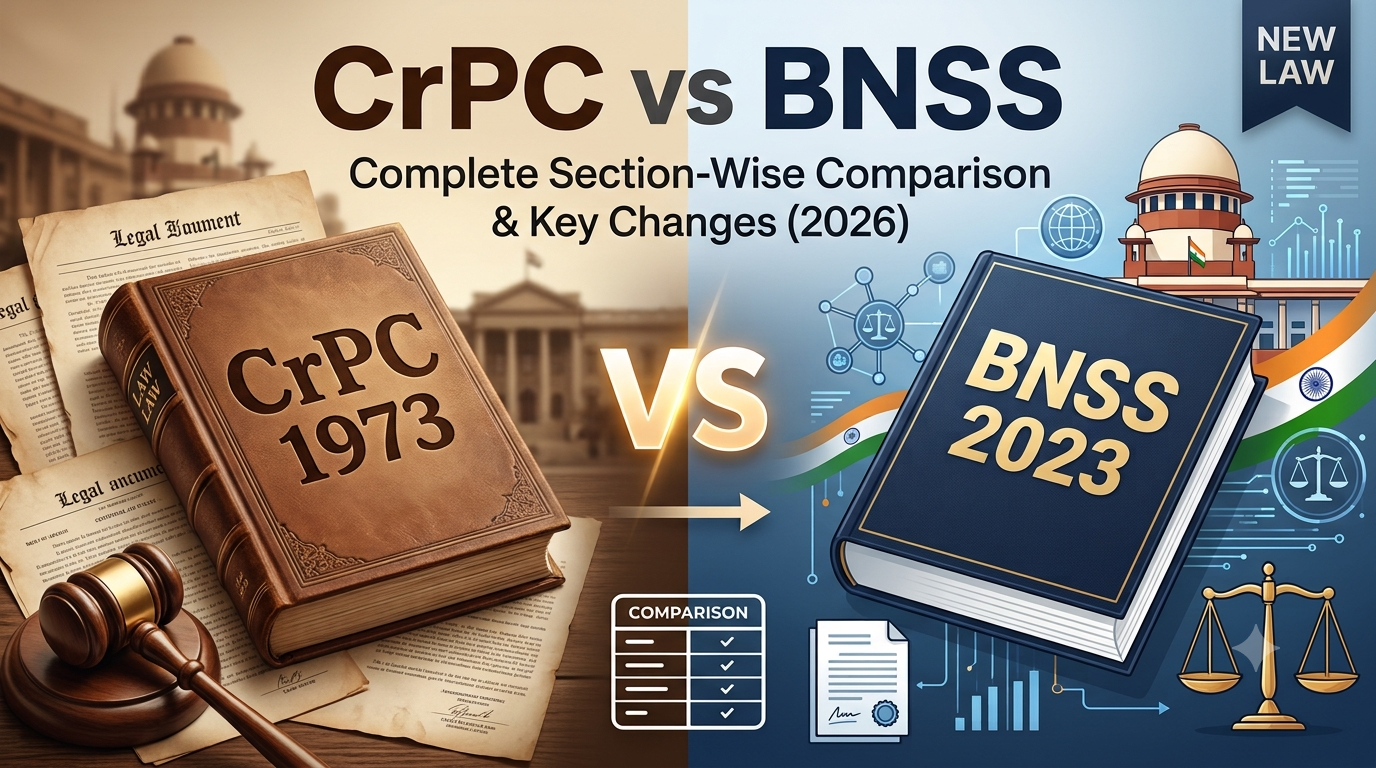
Bail and Parole: CrPC India vs BNSS 2023
Previously, the Code of Criminal Procedure, 1973 (CrPC) had the control over bail. Presently, the Bharatiya Nagarik Suraksha Sanhita, 2023 (BNSS) has taken the control instead. However, parole is not covered under BNSS and continues to be regulated through parole rules in India, framed by State Governments under jail manuals.
BNSS 2023: Bail Provisions (Updated)
Under BNSS 2023, bail provisions are consolidated under Chapter XXXV – Provisions as to Bail and Bonds.
BNSS Sections on Bail
| BNSS Chapter / Sections | Subject Matter |
|---|---|
| Chapter XXXV | Provisions as to Bail and Bonds |
| Sections 478–496 BNSS | Anticipatory bail, default bail, bonds, sureties, cancellation of bail: Bail in bailable and non-bailable offences. |
These sections replace the earlier CrPC Sections 436–450.
⚠️ Important:
- Parole is not provided under BNSS 2023.
- Parole remains governed by State prison laws and jail manuals.
Types of Bail in India
Understanding is directed at revealing the various types of bail as it applies to the mechanism of bail in a criminal procedure.
- Regular Bail – It is issued after the arrest by a Magistrate or Sessions Court.
- Anticipatory Bail – It is issued before the arrest to ensure protection from arbitrary detention.
- Interim Bail – It is a temporary bail granted until the final decision on the bail application.
- Default Bail – It is given when the investigation is not finished within the time legally allowed.
The types of bail mentioned above reinforce the principle that both Bail and Parole are there to safeguard human freedom and are not to be considered forms of punishment before the trial.
Parole Rules in India
Parole laws do not follow a standard pattern across the regions of India. Each State frames its own parole rules under prison laws and jail manuals.
Common Grounds for Grant of Parole:
- The passing away or the sudden illness of a very close relative
- The wedding of a son, daughter, or a brother or sister
- The medical care of the inmate
- Disasters or urgent matters concerning farming or real estate
Parole is considered a reformative and humanitarian measure, not a legal right.
Bail and Parole Legal Provisions: Key Differences
The bail and parole legal provisions differ significantly in nature:
- Bail provisions are judicial and statutory
- Parole provisions are executive and administrative
Courts directly order parole, but bail is typically granted by the court.
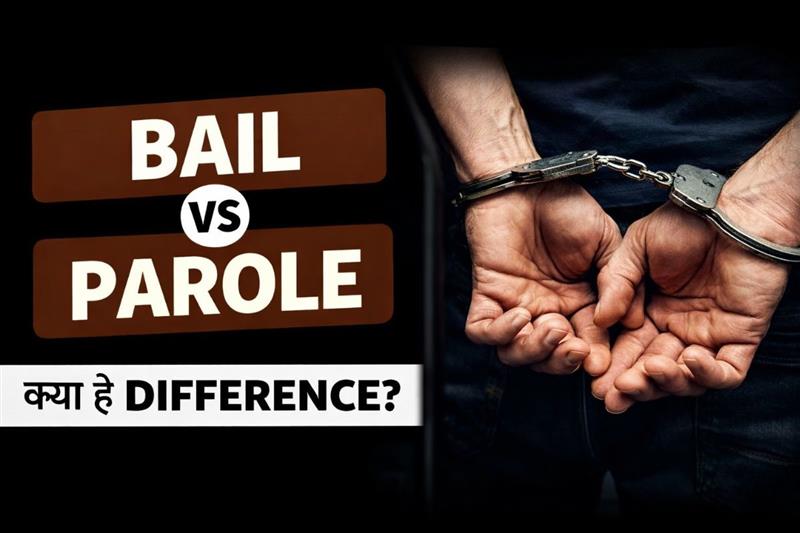
What Is the Difference Between Bail and Parole?
The question “what is the difference between bail and parole?” can be clearly understood through the following comparison:
Difference Between Bail and Parole (Table)
| Basis | Bail | Parole |
| Applicable To | Accused person | Convicted prisoner |
| Stage | Before conviction | After conviction |
| Governing Law | BNSS 2023 (earlier CrPC) | State jail manuals |
| Authority | Courts | Prison / Executive authorities |
| Objective | Ensure trial attendance | Reformation & humanitarian relief |
| Duration | Till trial or cancellation | Fixed temporary period |
| Nature | Legal right (in some cases) | Privilege |
| Custody | Judicial custody | Executive custody |
This table clearly explains the bail and parole difference under Indian law.
Bail and Parole Supreme Court Judgments
Indian courts played a vital role in shaping the law of Bail and Parole.
Important Judgments on Bail:
- Gudikanti Narasimhulu v. Public Prosecutor – Bail must balance liberty and societal interest
- Hussainara Khatoon v. State of Bihar – Speedy trial and undertrial bail recognized under Article 21
- Satender Kumar Antil v. CBI – Reinforced “bail is the rule, jail is the exception”
Judicial View on Parole:
The Supreme Court has held that parole is not a fundamental right, but arbitrary denial of parole violates Article 21.
These bail and parole Supreme Court judgments continue to guide courts even after the enactment of BNSS 2023.
Bail and Parole Rights in India
Bail and parole rights in India are not absolute and are subject to conditions.
- Bail can be claimed as a right in bailable offences
- Parole is a discretionary relief
Bail or parole may be revoked if the conditions thereof are broken, for example, absconding, committing another offence, or misusing liberty.
Bail and Parole Explained Simply
To put it simply:
- Bail = Temporary freedom for an accused person before conviction
- Parole = Temporary freedom for a convicted prisoner after conviction
This clear explanation ensures correct legal understanding and prevents misuse of remedies.
Conclusion
The Difference Between Bail and Parole in India Explained Clearly lies in their stage of application, legal nature, governing law, and purpose. While Bail and Parole both safeguard liberty, they serve entirely different functions within the criminal justice system. Bail protects the rights of the accused under BNSS 2023, whereas parole reflects the reformative philosophy of punishment under prison laws.