An in-depth analysis of recent jurisprudence and its impact on law and regulation
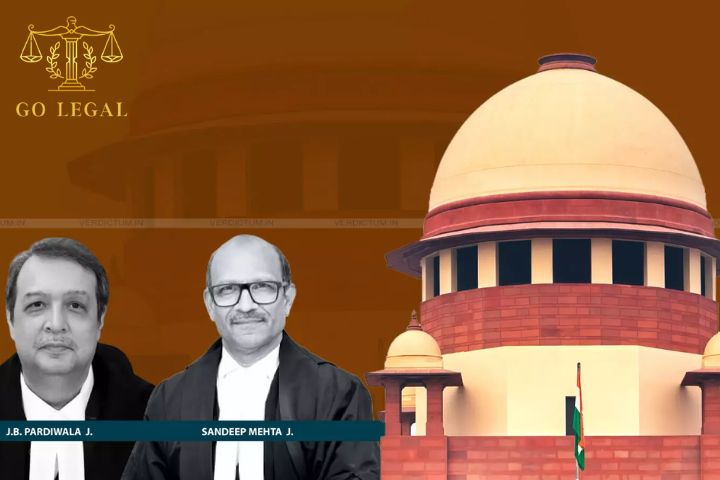
The Supreme Court of India shapes law through two main methods because it interprets constitutional law and establishes procedural rules for economic and regulatory cases. A two-judge bench which included Justices J.B. Pardiwala and Sandeep Mehta delivered a significant recent ruling which maintained judicial tradition by not stopping the ongoing Competition Commission of India investigation into alleged dominance abuse in the Kerala cable television market thus proving that the Court maintains a delicate relationship between its judicial limits and its power to oversee regulations.
The ruling demonstrates how Justices Pardiwala and Mehta handle judicial control through their decisions which show their interpretation of laws and their enforcement of legal standards across different fields which include competition law and procedural safeguards.
The CCI Investigation Case: Judicial Deference in Early-Stage Probes
The Supreme Court rejected JioStar Private Limited’s challenge against a Kerala High Court ruling which confirmed the CCI’s authority to investigate alleged dominance abuse in the Kerala television industry through its judgment dated 27 January 2026.
Background
Asianet Digital Network Limited (ADNPL) accused JioStar (formerly Star India Private Limited) of providing disproportionately large discounts and special advantages to Kerala Communicators Cable Limited (KCCL) which created unfair competition conditions in the regional market. The Kerala High Court had refused to stay the CCI’s investigation which led to an appeal being made to the Supreme Court.
Supreme Court’s Stance
- The bench of Justices J.B. Pardiwala and Sandeep Mehta refused to intervene at this preliminary stage of the investigation.
- The Court observed that judicial interference is not warranted when a statutory authority like the CCI has begun a prima facie inquiry in accordance with law.
- The judgment protects judicial authority which must remain inactive during regulatory proceedings because competition law requires immediate identification of anti-competitive behavior.
Legal Implications
The ruling establishes an important legal standard which requires courts to refrain from investigating active cases until they find definite statutory breaches or basic rights violations. The judiciary’s constitutional function requires it to monitor legal matters while maintaining the independence of statutory bodies during their investigation processes.
Profiles of Both Justices
Understanding the legal philosophies of the judges behind such decisions adds depth to any analysis.
Justice J.B. Pardiwala
- The Supreme Court appointed him on 9 May 2022 after he completed his successful judicial career in the Gujarat High Court.
- He has established himself through his extensive judicial work which covers criminal cases, civil cases, tax cases and administrative law cases. His judicial work includes more than 400 criminal decisions and approximately 200 civil and tax decisions.
- The legal community expects him to become Chief Justice of India by 2028 because of his seniority and judicial achievements.
Justice Pardiwala’s jurisprudence often emphasizes procedural integrity, judicial restraint, and clear statutory interpretation, as visible in recent competition law and bail procedural cases.
Justice Sandeep Mehta
- The Supreme Court judge took his oath on November 9 2023 after completing his role as Chief Justice of the Gauhati High Court.
- He bases his judicial decisions on established legal procedures and existing statutory requirements. His judicial decisions demonstrate precise understanding of the judicial boundaries which courts and administrative agencies must operate within.
Together, the bench reflects a judicial philosophy that prioritizes institutional harmony, rule of law, and respect for regulatory competence.
Recent Judicial Trends Involving This Bench
Justice Pardiwala and Justice Mehta have collaborated on several significant matters beyond the CCI investigation case:
1. Witness Protection and Bail Cancellation
The Supreme Court established that a witness protection program cannot serve as a substitute for bail cancellation during cases where witnesses face proven risks to their safety.
- The bench explained that replacing statutory bail requirements with additional programs results in judicial power loss together with the removal of legal protections.
- The order established that trial courts hold primary authority to make bail decisions while requiring thorough assessment of witness threats before any protective actions can substitute for judicial control.
2. Speedy Trials and Judicial Practice
In other Supreme Court considerations involving Justice Pardiwala (though with other benches), the Court urged revival of day-to-day trial practice in sensitive matters — stressing constitutional rights to timely justice.
3. Anticipatory Bail Procedure
The bench has also been critical of lower courts focusing on irrelevant procedural queries (e.g., why an accused was not arrested) rather than merits of anticipatory bail applications — reaffirming the importance of substantive justice over procedural formalities.
4. Fee Structure for AIBE
The justices Pardiwala and Mehta dismissed the AIBE fee structure challenge because the Bar Council of India charges were reasonable based on the costs needed to conduct the examination.
Why These Decisions Matter
The decisions involving Justices J.B. Pardiwala and Sandeep Mehta reflect several contemporary legal trends:
1. Respect for Regulatory Autonomy
The Supreme Court has ruled that statutory bodies such as the CCI can conduct their investigations without any judicial interference before their preliminary stages. The system protects regulatory independence while it defends citizens’ rights.
2. Procedural Discipline
The bench places strong emphasis on procedural proprity through its evaluation of bail procedures as well as witness protection methods and trial proceedings. The decisions require judges to reach fair judgments while maintaining essential legal protections.
3. Evolving Competition Jurisprudence
The Court demonstrates its commitment to fighting anti-competitive practices through its decision to maintain initial investigative processes for competition cases. The Court demonstrates this commitment through its investigations in fast-evolving markets which include telecommunications and media distribution.
4. Judicial Restraint with Rights Protection
The rulings show that judges exercise caution when making decisions which protect constitutional rights from judicial overreach. The system demonstrates its developed power distribution among the judicial branch, executive branch, and independent regulatory agencies.
Conclusion
The bench of Justices J.B. Pardiwala and Sandeep Mehta is playing a pivotal role in shaping Indian jurisprudence through their work on regulatory law and criminal procedure and constitutional litigation. The judges demonstrated judicial restraint through their dismissal of the CCI investigation challenge while showing respect for institutional boundaries and maintaining their dedication to procedural fairness. The judges create legal precedents through their rulings which combine their legal knowledge with statutory requirements and judicial safeguards that establish the foundation of India’s emerging judicial system.
FAQs
1. Who are Justices J.B. Pardiwala and Sandeep Mehta?
Justice J.B. Pardiwala and Justice Sandeep Mehta are judges of the Supreme Court of India known for decisions emphasizing procedural discipline, regulatory autonomy, and judicial restraint.
2. What was the core issue in the CCI investigation case?
The case involved a challenge to a Kerala High Court decision that upheld a CCI investigation into alleged abuse of dominance in the cable TV market. The Supreme Court refused to intervene at the preliminary stage.
3. Why did the Supreme Court refuse to interfere?
The Court held that judicial intervention is not appropriate in early-stage investigations unless there is a clear legal error or violation of rights.
4. How does this judgment impact competition law?
It reaffirms judicial deference to regulatory bodies like the CCI to initiate and conduct probe processes independently.
5. Are these judges likely to have broader influence?
Yes. Justice Pardiwala may become the Chief Justice of India in 2028, and both judges are expected to continue contributing influential decisions across legal domains.