
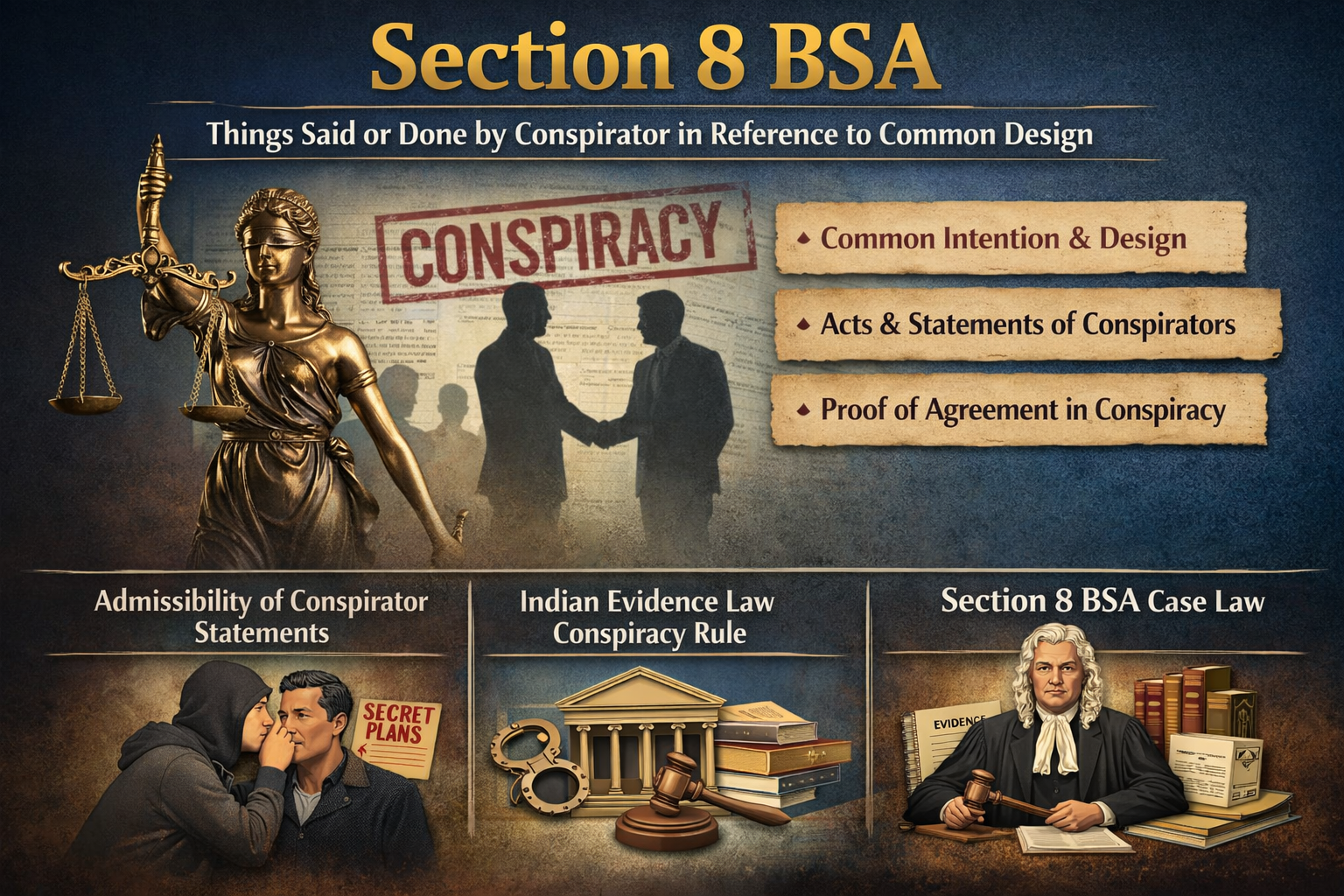
Section 8 BSA – Things Said or Done by Conspirator in Reference to Common Design

Home / Section Details

Table of Contents

Section 8 BSA – Things Said or Done by Conspirator in Reference to Common Design The Bharatiya Sakshya Adhiniyam Section 8 explanation forms a crucial part of modern Indian evidence law. The section 8 BSA establishes rules about whether conspirators' acts and statements and declarations they made can be used as evidence for their shared illegal activities. The provision serves as an essential element for proving criminal conspiracy because direct evidence of the crime is unavailable in particular cases. In conspiracy-related offences, courts often rely on circumstantial evidence. Section 8 BSA provides the legal foundation for admitting such evidence, particularly when multiple accused persons are involved in executing a shared plan. Meaning and Scope of Section 8 BSA Section 8 BSA states that anything said, done, or written by any one of the conspirators, in reference to their common intention, becomes relevant against all conspirators. This applies as long as the acts are done during the continuance of the conspiracy. Key Elements of Section 8 BSA: Existence of a conspiracy: The two parties involved in the agreement need to establish their contract before proceeding with their plans. Common design: The act must relate to a shared unlawful objective. During the conspiracy: The parties involved in the conspiracy must demonstrate their criminal activities through their statements and actions which they conduct during the active period of the conspiracy. In reference to the design: The act or statement must be connected to the conspiracy. This reflects the Indian evidence law conspiracy rule, where each conspirator acts as an agent of the others. Role of Common Intention and Design The role of common intention and design is central to understanding Section 8 BSA. Courts must establish that all accused persons shared a unified objective. Important Aspects: Shared objective: Everything he perfected was the work of his own hands. Mutual understanding: The evolution of an agreement by conduct is evidence enough, as formal acceptance is not required. Collective liability: Every member shall be held accountable for the performance of others. In many cases, the proof of agreement in conspiracy cases is derived from behavior, communication, and surrounding circumstances rather than direct evidence. Admissibility of Conspirator Statements One of the most significant features of Section 8 BSA is the admissibility of conspirator statements. When Statements Become Admissible: Statements must be made during the conspiracy. They must relate to the common design. They must assist in achieving the unlawful objective. Explanation: Because the law takes into account that conspiracies are carried out in secret, the admission of statements by co-conspirators is therefore crucial to the proof of the offense. For example: If one conspirator communicates instructions to another, such communication becomes relevant evidence against all members. This principle strengthens the evidence of conspiracy in India, where direct proof is often unavailable. Acts and Declarations of Conspirators Under Section 8 BSA, not only statements but also the acts and declarations of conspirators are admissible. Types of Relevant Conduct: Preparatory acts: Planning meetings, arranging resources. Execution acts: Carrying out unlawful activity. Subsequent conduct: Actions showing continuation of the conspiracy. Explanation: EThe actions taken during the conspiracy show the shared intentions of all its participants. The investigators track all events which happened during the case to find out who participated in the incident. The prosecution needs to prove that the defendant maintained an ongoing connection to the criminal activity according to the rules of criminal conspiracy evidence. Proof of Agreement in Conspiracy Cases The proof of agreement in conspiracy cases is often indirect. Section 8 BSA allows courts to rely on circumstantial evidence. Methods of Proof: Communication records: Calls, messages, emails. Conduct patterns: Repeated meetings or coordinated actions. Financial transactions: Shared resources or funds. Explanation: A formal agreement is rarely documented. Courts infer conspiracy from consistent and coordinated behavior. This makes Section 8 BSA a powerful tool in criminal trials. Section 8 BSA Case Law and Judicial Interpretation Judicial interpretation has played an important role in clarifying the scope of Section 8 BSA case law. Key Principles from Case Law: The court does not accept statements which were made after the conspiracy had concluded. The existence of a conspiracy requires independent evidence to establish its existence. The prosecution needs to show more than mere association to prove that the defendant participated in the crime. Explanation: Courts emphasize caution while applying Section 8 BSA. The prosecution must prove that the accused actively participated in the conspiracy. Practical Application in Criminal Trials The application of Section 8 BSA is common in cases such as: Organized crime Fraud and financial scams Terror-related offences Drug trafficking How Courts Apply the Provision: Establish the existence of conspiracy. Identify the common intention. Examine statements and acts of conspirators. Determine their relevance to the common design. This structured approach ensures fairness while applying the Indian evidence law conspiracy rule. Limitations of Section 8 BSA While Section 8 BSA is a powerful evidentiary provision, it has certain limitations. Key Limitations: Post-conspiracy statements excluded: Statements made after completion are irrelevant. Requirement of independent evidence: Conspiracy must be proved first. Risk of misuse: Courts must avoid wrongful implication. Explanation: These safeguards ensure that innocent persons are not held liable merely due to association. Importance of Section 8 BSA in Modern Evidence Law Section 8 BSA strengthens the framework of evidence of conspiracy in India by recognizing the collective nature of criminal acts. Why It Matters: Enables courts to consider indirect evidence. Addresses the secretive nature of conspiracies. Ensures accountability of all participants. This provision reflects the evolving nature of criminal law and aligns with modern investigative practices. FAQs on Section 8 BSA 1. What is Section 8 BSA? Section 8 BSA deals with the admissibility of acts and statements made by conspirators in relation to a common unlawful design. 2. Are all statements of conspirators admissible? No, only those statements made during the conspiracy and related to the common design are admissible. 3. How is conspiracy proved under Section 8 BSA? Through circumstantial evidence such as conduct, communication, and coordinated actions. 4. What is the role of common intention? The role of common intention and design is to establish that all accused shared a unified unlawful objective. 5. Can a person be convicted only on conspirator statements? No, courts require supporting evidence along with such statements. Conclusion Section 8 BSA serves as an essential tool for proving conspiracy because it enables courts to assess statements and activities that co-conspirators have produced. The system enables investigators to establish proof of intricate criminal activities when they lack direct evidence. This law enables judicial systems to reach fair decisions about conspiracy cases by examining both the conduct and statements of conspirators together with evidence of their agreement.
The Bharatiya Sakshya Adhiniyam Section 8 explanation forms a crucial part of modern Indian evidence law. The section 8 BSA establishes rules about whether conspirators’ acts and statements and declarations they made can be used as evidence for their shared illegal activities. The provision serves as an essential element for proving criminal conspiracy because direct evidence of the crime is unavailable in particular cases.

In conspiracy-related offences, courts often rely on circumstantial evidence. Section 8 BSA provides the legal foundation for admitting such evidence, particularly when multiple accused persons are involved in executing a shared plan.

Meaning and Scope of Section 8 BSA

Section 8 BSA states that anything said, done, or written by any one of the conspirators, in reference to their common intention, becomes relevant against all conspirators. This applies as long as the acts are done during the continuance of the conspiracy.

Key Elements of Section 8 BSA:

  • Existence of a conspiracy: The two parties involved in the agreement need to establish their contract before proceeding with their plans.
  • Common design: The act must relate to a shared unlawful objective.
  • During the conspiracy: The parties involved in the conspiracy must demonstrate their criminal activities through their statements and actions which they conduct during the active period of the conspiracy.
  • In reference to the design: The act or statement must be connected to the conspiracy.

This reflects the Indian evidence law conspiracy rule, where each conspirator acts as an agent of the others.

Role of Common Intention and Design

The role of common intention and design is central to understanding Section 8 BSA. Courts must establish that all accused persons shared a unified objective.

Important Aspects:

  • Shared objective: Everything he perfected was the work of his own hands.
  • Mutual understanding: The evolution of an agreement by conduct is evidence enough, as formal acceptance  is not required.
  • Collective liability: Every member shall be held accountable for the performance of others.

In many cases, the proof of agreement in conspiracy cases is derived from behavior, communication, and surrounding circumstances rather than direct evidence.

Admissibility of Conspirator Statements

One of the most significant features of Section 8 BSA is the admissibility of conspirator statements.

When Statements Become Admissible:

  • Statements must be made during the conspiracy.
  • They must relate to the common design.
  • They must assist in achieving the unlawful objective.

Explanation:

Because the law takes into account that conspiracies are carried out in secret, the admission of statements by co-conspirators is therefore crucial to the proof of the offense.

For example:

  • If one conspirator communicates instructions to another, such communication becomes relevant evidence against all members.

This principle strengthens the evidence of conspiracy in India, where direct proof is often unavailable.

Acts and Declarations of Conspirators

Under Section 8 BSA, not only statements but also the acts and declarations of conspirators are admissible.

Types of Relevant Conduct:

  • Preparatory acts: Planning meetings, arranging resources.
  • Execution acts: Carrying out unlawful activity.
  • Subsequent conduct: Actions showing continuation of the conspiracy.

Explanation:

EThe actions taken during the conspiracy show the shared intentions of all its participants. The investigators track all events which happened during the case to find out who participated in the incident. 

The prosecution needs to prove that the defendant maintained an ongoing connection to the criminal activity according to the rules of criminal conspiracy evidence.

Proof of Agreement in Conspiracy Cases

The proof of agreement in conspiracy cases is often indirect. Section 8 BSA allows courts to rely on circumstantial evidence.

Methods of Proof:

  • Communication records: Calls, messages, emails.
  • Conduct patterns: Repeated meetings or coordinated actions.
  • Financial transactions: Shared resources or funds.

Explanation:

A formal agreement is rarely documented. Courts infer conspiracy from consistent and coordinated behavior. This makes Section 8 BSA a powerful tool in criminal trials.

Section 8 BSA Case Law and Judicial Interpretation

Judicial interpretation has played an important role in clarifying the scope of Section 8 BSA case law.

Key Principles from Case Law:

  • The court does not accept statements which were made after the conspiracy had concluded.
  • The existence of a conspiracy requires independent evidence to establish its existence.
  • The prosecution needs to show more than mere association to prove that the defendant participated in the crime.

Explanation:

Courts emphasize caution while applying Section 8 BSA. The prosecution must prove that the accused actively participated in the conspiracy.

Practical Application in Criminal Trials

The application of Section 8 BSA is common in cases such as:

  • Organized crime
  • Fraud and financial scams
  • Terror-related offences
  • Drug trafficking

How Courts Apply the Provision:

  1. Establish the existence of conspiracy.
  2. Identify the common intention.
  3. Examine statements and acts of conspirators.
  4. Determine their relevance to the common design.

This structured approach ensures fairness while applying the Indian evidence law conspiracy rule.

Limitations of Section 8 BSA

While Section 8 BSA is a powerful evidentiary provision, it has certain limitations.

Key Limitations:

  • Post-conspiracy statements excluded: Statements made after completion are irrelevant.
  • Requirement of independent evidence: Conspiracy must be proved first.
  • Risk of misuse: Courts must avoid wrongful implication.

Explanation:

These safeguards ensure that innocent persons are not held liable merely due to association.

Importance of Section 8 BSA in Modern Evidence Law

Section 8 BSA strengthens the framework of evidence of conspiracy in India by recognizing the collective nature of criminal acts.

Why It Matters:

  • Enables courts to consider indirect evidence.
  • Addresses the secretive nature of conspiracies.
  • Ensures accountability of all participants.

This provision reflects the evolving nature of criminal law and aligns with modern investigative practices.

FAQs on Section 8 BSA

1. What is Section 8 BSA?

Section 8 BSA deals with the admissibility of acts and statements made by conspirators in relation to a common unlawful design.

2. Are all statements of conspirators admissible?

No, only those statements made during the conspiracy and related to the common design are admissible.

3. How is conspiracy proved under Section 8 BSA?

Through circumstantial evidence such as conduct, communication, and coordinated actions.

4. What is the role of common intention?

The role of common intention and design is to establish that all accused shared a unified unlawful objective.

5. Can a person be convicted only on conspirator statements?

No, courts require supporting evidence along with such statements.

Conclusion

Section 8 BSA serves as an essential tool for proving conspiracy because it enables courts to assess statements and activities that co-conspirators have produced. The system enables investigators to establish proof of intricate criminal activities when they lack direct evidence. This law enables judicial systems to reach fair decisions about conspiracy cases by examining both the conduct and statements of conspirators together with evidence of their agreement.
Details

Date

Author

More Related

Section 12 BSA – Facts Showing Existence of State of Mind, or of Body or Bodily Feeling

Section 12 BSA – Facts Showing Existence of State of Mind, or of Body or Bodily Feeling

March 30, 2026

9 min read

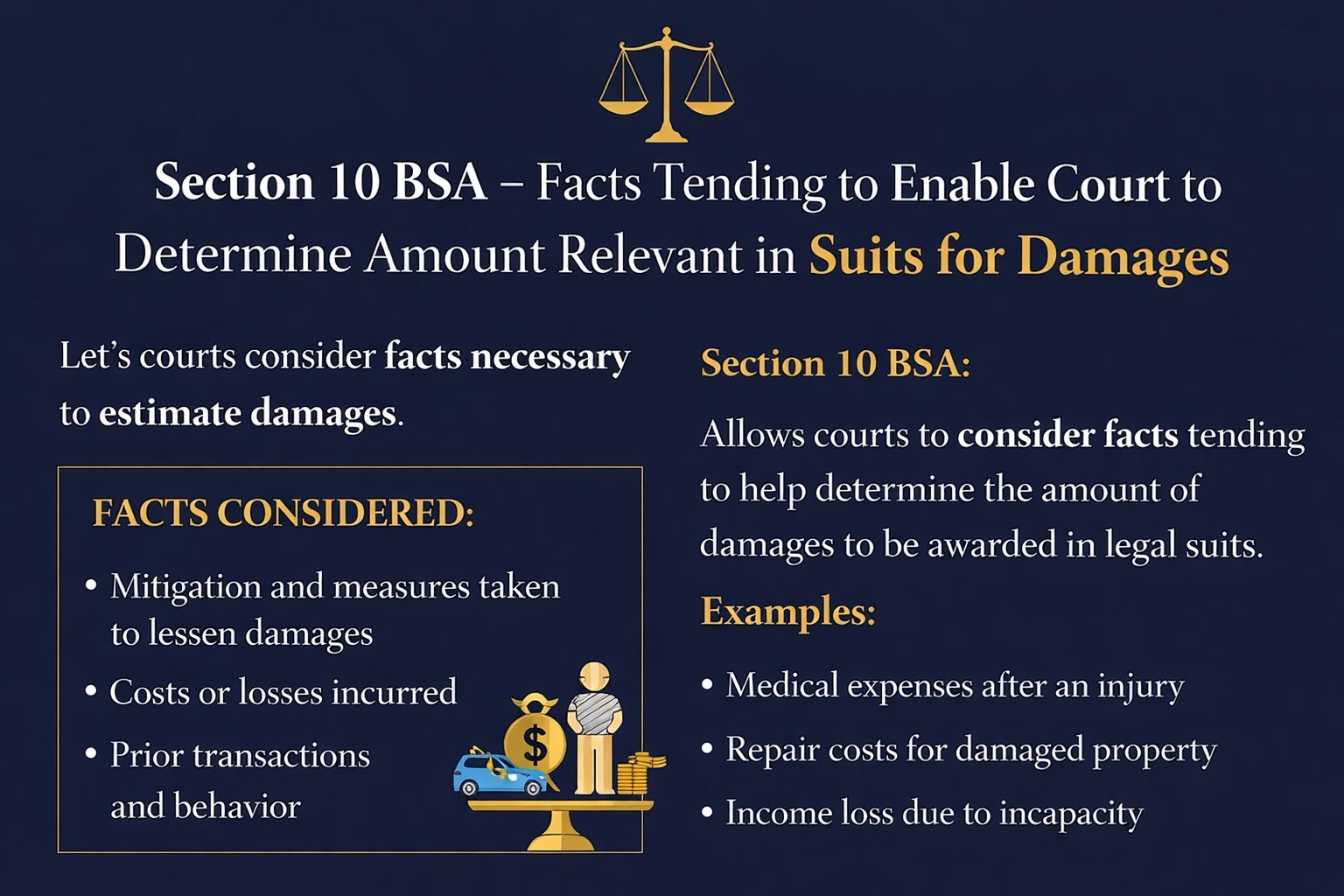
Section 10 BSA – Facts Tending to Enable Court to Determine Amount Relevant in Suits for Damages

Section 10 BSA – Facts Tending to Enable Court to Determine Amount Relevant in Suits for Damages

March 25, 2026

9 min read

Section 9 BSA: When Facts Not Otherwise Relevant Become Relevant

Section 9 BSA: When Facts Not Otherwise Relevant Become Relevant

March 23, 2026

9 min read