Domestic violence encompasses more than physical abuse because it includes all forms of emotional, economic, verbal, and psychological abuse that occur within a domestic relationship. The Indian Parliament created a special law to protect women from domestic abuse because this problem represents a major social and legal challenge. The article presents a detailed description of the Domestic Violence Act explained which includes its definition, scope of implementation, legal provisions, available remedies, and methods of enforcement.
Understanding What is the Domestic Violence Act
The Domestic Violence Act defines domestic violence through its legal framework which protects women from abusive relationships. The Protection of Women from Domestic Violence Act establishes domestic violence as a violation of women’s fundamental rights to life dignity and equality.
The Domestic Violence Act explained approach of the law is unique because it focuses on protection and relief rather than punishment alone. The law provides victims with immediate civil remedies which remain available to them regardless of criminal case development.
Domestic Violence Act Explained: Legal Background and Purpose
Domestic Violence Act 2005
The Domestic Violence Act 2005 started its legal existence when it became effective in October 2006. The law was created to solve problems that existing criminal statutes had which did not provide protection against non-physical abuse and immediate emergency protection needs.
The Domestic Violence Act explained through legislative intent shows that the law aims to:
- Prevent abuse before it escalates
- Secure a woman’s right to reside in her shared household
- Provide speedy and effective relief
Scope of Domestic Violence Act in India
The Domestic Violence Act in India applies to women of all ages, religions, and social backgrounds. It protects women who are:
- Married
- In live-in relationships
- Mothers, sisters, widows, or daughters
A woman does not need to prove ownership of the house to seek protection. The Domestic Violence Act explained clearly establishes that the right to residence is independent of property rights.
What Constitutes Domestic Violence Under the Law
Domestic Violence Act provisions
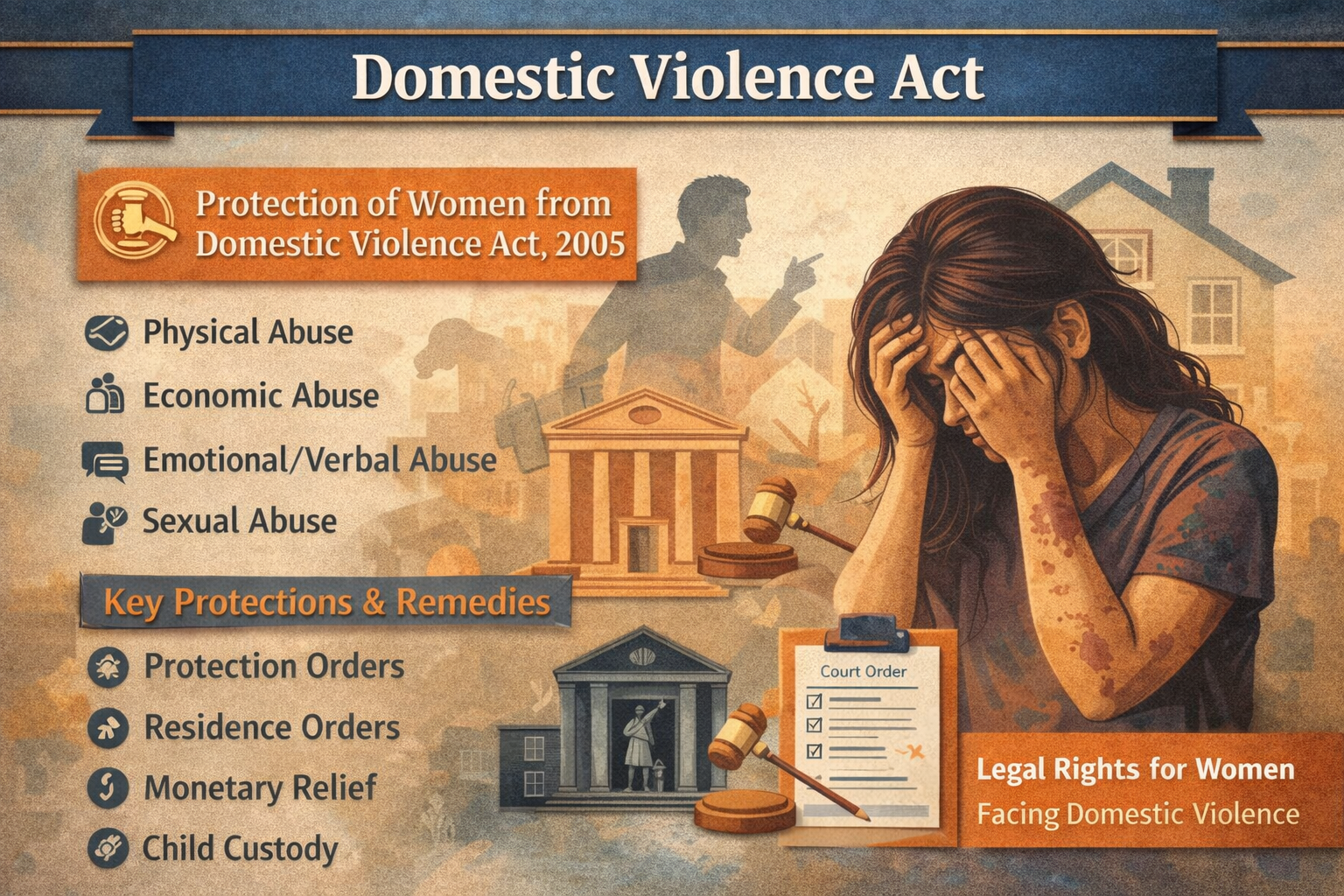
According to the Domestic Violence Act provisions, abuse includes:
- Physical abuse includes three forms of violence which are assault and bodily harm and threats.
- Emotional and verbal abuse includes insults and humiliation and constant critical remarks.
- Economic abuse occurs when someone is denied access to money and food and shelter and medical treatment.
- Sexual abuse occurs when someone experiences forced sexual acts or degradation through sexual activities.
The law defines domestic violence through its wide definition which recognizes all types of abusive behavior. The Domestic Violence Act which judicial decisions explain shows that domestic violence exists through any single severe incident.
Legal Rights Under Domestic Violence Act
Women are granted specific enforceable rights under the law, including:
- Right to live in the shared household
- Right to protection against further violence
- Right to financial support and maintenance
- Right to custody of children (temporary)
- Right to medical and legal assistance
The Domestic Violence Act explained empowers courts to grant these rights swiftly, often through interim orders.
Domestic Violence Act Remedies for Women
The law offers multiple remedies to ensure safety and dignity:
- Protection Orders – restraining the abuser from committing further violence
- Residence Orders – preventing eviction or dispossession
- Monetary Relief – compensation for loss of earnings and expenses
- Custody Orders – temporary custody of children
- Compensation Orders – damages for mental and emotional suffering
These remedies highlight how the Domestic Violence Act explained prioritizes immediate relief over prolonged litigation.
Role of Magistrate and Protection Officers
Under the Domestic violence law in India, Judicial Magistrates of the First Class have jurisdiction to hear complaints. Protection Officers assist victims in filing applications, accessing shelters, and obtaining medical aid.
The Domestic Violence Act explained structure ensures that the victim is not left alone to navigate legal procedures.
Procedure for Filing a Complaint
What is the Domestic Violence Act in India – Procedure Aspect
A complaint can be filed by:
- The aggrieved woman
- A Protection Officer
- Any person acting on her behalf
The application is filed before a Magistrate under Section 12 of the Act. The Domestic Violence Act explained mandates that cases be disposed of within a reasonable timeframe to avoid delays.
Judicial Interpretation and Social Impact
Indian courts have repeatedly emphasized that the law must be interpreted liberally to fulfill its protective purpose. The Domestic Violence Act explained through judgments confirms that the law is remedial and not punitive in nature.
The Act has significantly contributed to:
- Increased awareness of women’s rights
- Recognition of non-physical abuse
- Improved access to justice for victims
Complete Legal Information on Domestic Violence Act
Complete legal information on Domestic Violence Act
To summarize, the Act:
- Applies to all domestic relationships
- Covers physical and non-physical abuse
- Provides civil remedies alongside criminal law
- Ensures protection, residence, and financial relief
The Domestic Violence Act explained holistically addresses the realities faced by women inside households and offers a legal framework rooted in dignity and justice.
Conclusion
The Domestic Violence Act needs to be understood because it serves as the foundation for protecting women’s rights in India. The Domestic Violence Act explains all forms of domestic violence through its legal framework which provides immediate protection and relief to victims of abuse. The law considers domestic violence to be a serious human rights violation which helps to protect women’s rights while upholding constitutional principles of equality and dignity.