
What Is Special Intensive Revision and How Does It Affect Voters?
It is a primary duty of all democratic systems to ensure elections to be fair and accurate. In India, this responsibility is on the Election Commission which continuously updates the electoral roll to maintain accuracy and transparency. Nonetheless, there are instances when the usual revisions do not suffice. When the voter list has significant errors, missing names, or duplicate entries, a more thorough process called Special Intensive Revision is initiated.
This article explains what a Special Intensive Revision is, why it is conducted, the steps involved, how it can Affect Voters, and the legal provisions (IPC, BNS, RPA) connected to it.
Understanding Special Intensive Revision: Meaning, Aim, and Impact
A Special Intensive Revision is a detailed re-checking of the electoral roll carried out when large-scale errors or irregularities are noticed. It involves house-to-house verification, correction of entries, removal of ineligible voters, and addition of new eligible names. This system ensures that every qualified citizen gets listed through proper Voter Registration.
A Special Intensive Revision is more detailed than an annual revision because it involves deeper physical verification and a stricter process to maintain the purity of the Electoral Process.
Why a Special Intensive Revision Is Conducted
1. Large-Scale Errors in the Electoral Roll
A Special Intensive Revision becomes necessary when:
- Many voters complain about missing names
- Duplicate entries are found
- Old or deceased voters remain listed
- People who migrated are still shown in the roll
Large errors affect fairness and can significantly Affect voters during elections.
2. Court Directions or Public Interest Cases
Sometimes High Courts or the Supreme Court direct the Election Commission to carry out a Special Intensive Revision due to complaints of irregularities.
3. Population Movement and Migration
Migration takes place often in urban and semi-urban areas. By having an updated list, Voter Eligibility can be properly determined and misuse of entries can be avoided.
4. Preparation for Major Elections
Before State or Lok Sabha elections, a Voter List Update becomes important to prepare accurate resources, polling booths, and staff under Election Preparation.
Key Features of the Special Intensive Revision Process
1. House-to-House Verification
Officers (BLOs) visit every household to physically verify:
- Name
- Age
- Citizenship
- Address
- Voter ID details
This step prevents impersonation and provides genuine accuracy in the Electoral Process.
2. Claims and Objections Period
During this period:
- New applicants can file Voter Enrollment forms
- Existing voters can request corrections
- Citizens can object if names appear wrongly or fraudulently
It improves accuracy and transparency.
3. Removal of Ineligible Entries
Names may be deleted if:
- The person has passed away
- The voter has shifted permanently
- Duplicate entries are found
- Fraudulent entries exist
This ensures only genuine voters remain.
4. Addition of First-Time Voters
- Citizens turning 18 years old can apply and get their names added, strengthening participation.
5. Updating All Documents
A Voter List Update includes verification of:
- Address proof
- Age documents
- ID proof (Aadhaar/Voter ID)
By following strict checks, the Election Commission reduces the chance of errors.
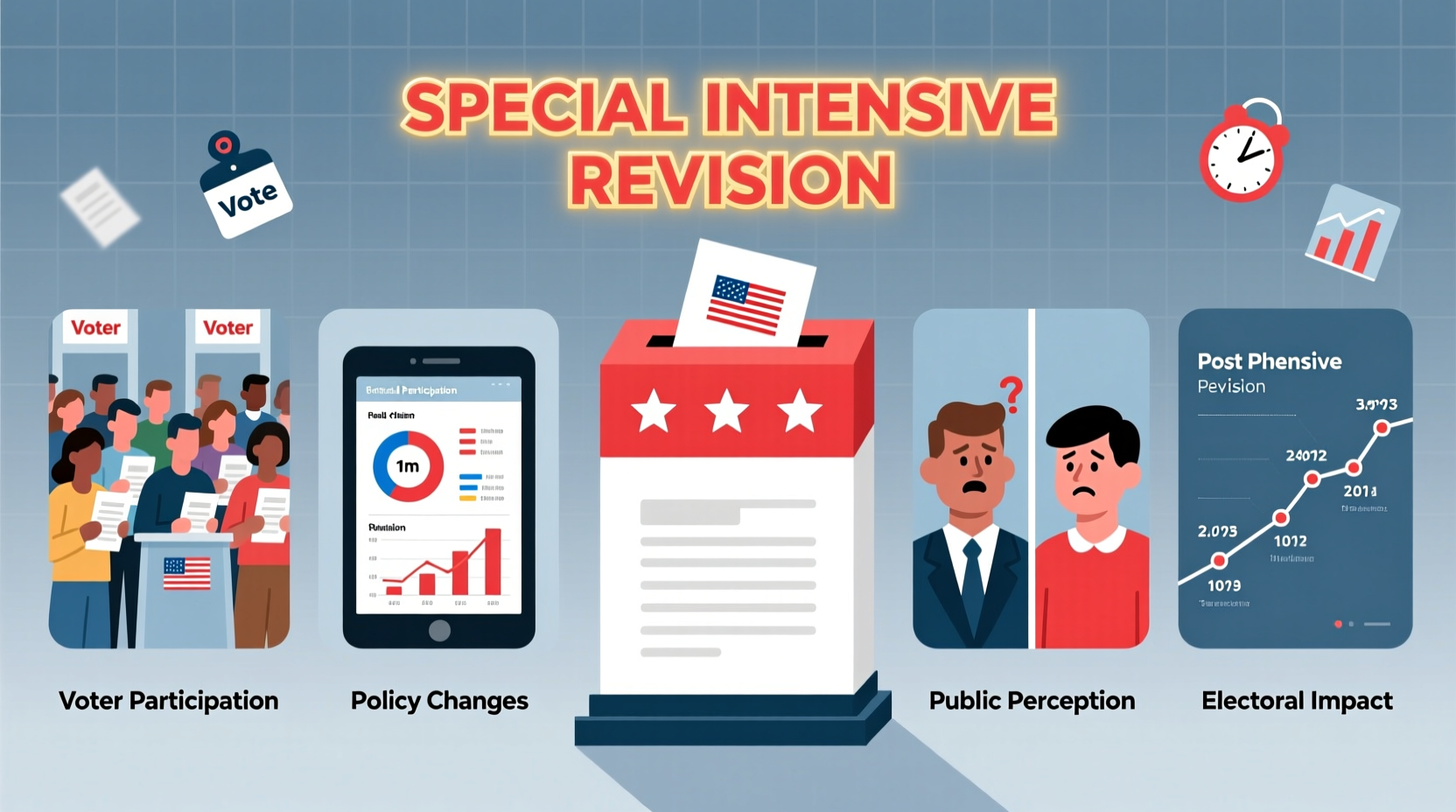
How Special Intensive Revision Affects Voters
The goal is positive, but the effects on voters can be both helpful and challenging.
1. Positive Effects
(a) Accurate Electoral Roll
- Voters get a clean and correct electoral roll, reducing confusion on polling day.
(b) Better Voter Participation
- Correct entries ensure that every eligible citizen can vote without being turned away.
(c) Removal of Fraudulent Names
- By removing fake or illegal entries, the Electoral Process becomes stronger.
(d) Stronger Democracy
- Genuine voters receive proper representation, improving trust in the voting system.
2. Challenges for Voters
(a) Repeated Verification
- Many households are visited multiple times, which may feel inconvenient.
(b) Document Requirements
- People must provide address or age proof, or else their names may be flagged for re-check.
(c) Risk of Wrong Deletions
- Sometimes genuine voters get removed due to mismatched data.
They must reapply during the Voter Registration process.
Legal Provisions Supporting Special Intensive Revision
A Special Intensive Revision is backed by several important laws in India. These laws empower officers and protect citizens from fraudulent practices.
Bharatiya Nyay Sanhita (BNS), 2023
The BNS applies when criminal misconduct is linked with voter fraud during the revision process.
Relevant BNS Sections
- Section 139 – Impersonation for dishonest purposes
- Section 140 – Making false documents or claims
- Section 318 – Misusing identity documents like Voter ID
- Section 319 – Fraud involving identification
These sections are used against:
- Fake voters
- Forged documents
- Fraudulent entries
- Impersonation during verification
Detailed Steps in a Special Intensive Revision
1. Launch and Public Notice
The Election Commission issues a public notification specifying:
- Dates
- Process
- Documents needed
- Locations for filing claims
This builds awareness among citizens.
2. BLO Training and Preparation
- Booth Level Officers are trained to collect data correctly and identify doubtful entries.
3. Field Verification
Officers visit each house to:
- Collect forms
- Verify documents
- Confirm residence
- Record missing or new entries
This improves the authenticity of the electoral roll.
4. Publishing Draft Roll
A draft list is displayed publicly at:
- Panchayat offices
- Municipal offices
- Polling booths
- Online portals
Citizens can check if their details are correct.
5. Filing Claims and Objections
People can:
- Apply to include their name
- Request correction
- Object to a fraudulent entry
This stage is essential for accuracy.
6. Final Publication of Electoral Roll
- After verification and hearings, the final voter list update is submitted and published.
Common Problems Faced During Special Intensive Revision
1. Missing Names
Some names are mistakenly removed because:
- Address proof is unclear
- Migration data is mismatched
2. Duplicate Entries
- Multiple records of the same person may appear and need correction.
3. Wrong Address Entries
- Errors in house number or locality name lead to confusion.
4. Spelling Mistakes
- Misspelled names or wrong birth years create issues during polling.
5. Lack of Awareness
- Many citizens don’t know about the deadlines for Voter Registration or correction.
How Citizens Can Protect Their Voting Rights During Special Intensive Revision
1. Check Your Name Online
- Visit the official NVSP portal and verify your details.
2. Keep Documents Ready
Always keep:
- Aadhaar
- Address proof
- Age proof
- Photo ID
These documents ensure smooth verification.
3. Respond Quickly to BLO Visit
- Cooperate with officers and provide accurate information.
4. File Claims and Corrections Early
- Don’t wait until the last date.
5. Update Your Voter ID When You Shift
- Use Form 8A to update your address.
Why Special Intensive Revision Is Essential for Democracy
1. Ensures Fair Voting
- Election results depend heavily on the purity of the voter list.
2. Reduces Fraud
- By removing fake or duplicate names, elections become more reliable.
3. Improves Planning
Accurate numbers help in better Election Preparation, such as:
- Number of polling stations
- Staff deployment
- Voting machines allocation
4. Strengthens Public Trust
- Citizens trust the system more when they know the electoral process is accurate.
Conclusion
A Special Intensive Revision is not merely an update but rather a very significant process which by securing the electoral rolls maintains the purity of Indian elections. The correct verification of the electoral roll, mistakes rectification and the addition of new and eligible voters by the Election Commission allows the commission to take on the responsibility of offering the ballot to every Indian who is eligible.
It is a time-consuming process, and citizens are quite often required to provide a considerable amount of documentation, however, the end result is a purged, more equitable, and less opaque electoral system, which is the common good in the long run. Those who know the legal groundwork—RPA 1950, BNS 2023, and IPC—are able to see their rights and duties more clearly than others.