Domestic violence involves more than physical violence because it includes emotional abuse and economic deprivation and sexual coercion and verbal humiliation which occur between domestic partners. Indian law recognizes the seriousness of such abuse and provides strong legal protection to women. The Rights of woman in DV case are primarily governed by the Protection of Women from Domestic Violence Act, 2005, which focuses on protection, safety, and dignity rather than punishment alone.
This article describes the Rights of woman in DV case through its examination of statutory protections and court-granted reliefs and judicial safeguards which protect women under Indian law.
Understanding Domestic Violence Under Indian Law
Domestic violence includes:
- Abuse caused by physical contact.
- Verbal and emotional abuse can be considered as such.
- Sexual assault is a serious and damaging form of abuse.
- In a few instances, being emotionally or financially detached or deprived can justify abuse.
- The evil bin of getting threats that were going through with harassment or coercion through:
The Domestic Violence Act women rights framework applies not only to married women but also to women in live-in relationships and shared households. The Act provides legal solutions for women who experience domestic abuse since it protects their rights to seek justice.
Rights of Woman in DV Case Under the DV Act
The Rights of woman in DV case are civil rights that aim to prevent further abuse and provide immediate relief. These rights are enforceable through Magistrate courts and are independent of criminal prosecution.
Key features:
- Protection-focused approach
- Speedy relief
- No requirement of criminal conviction
- Applicable alongside other criminal laws
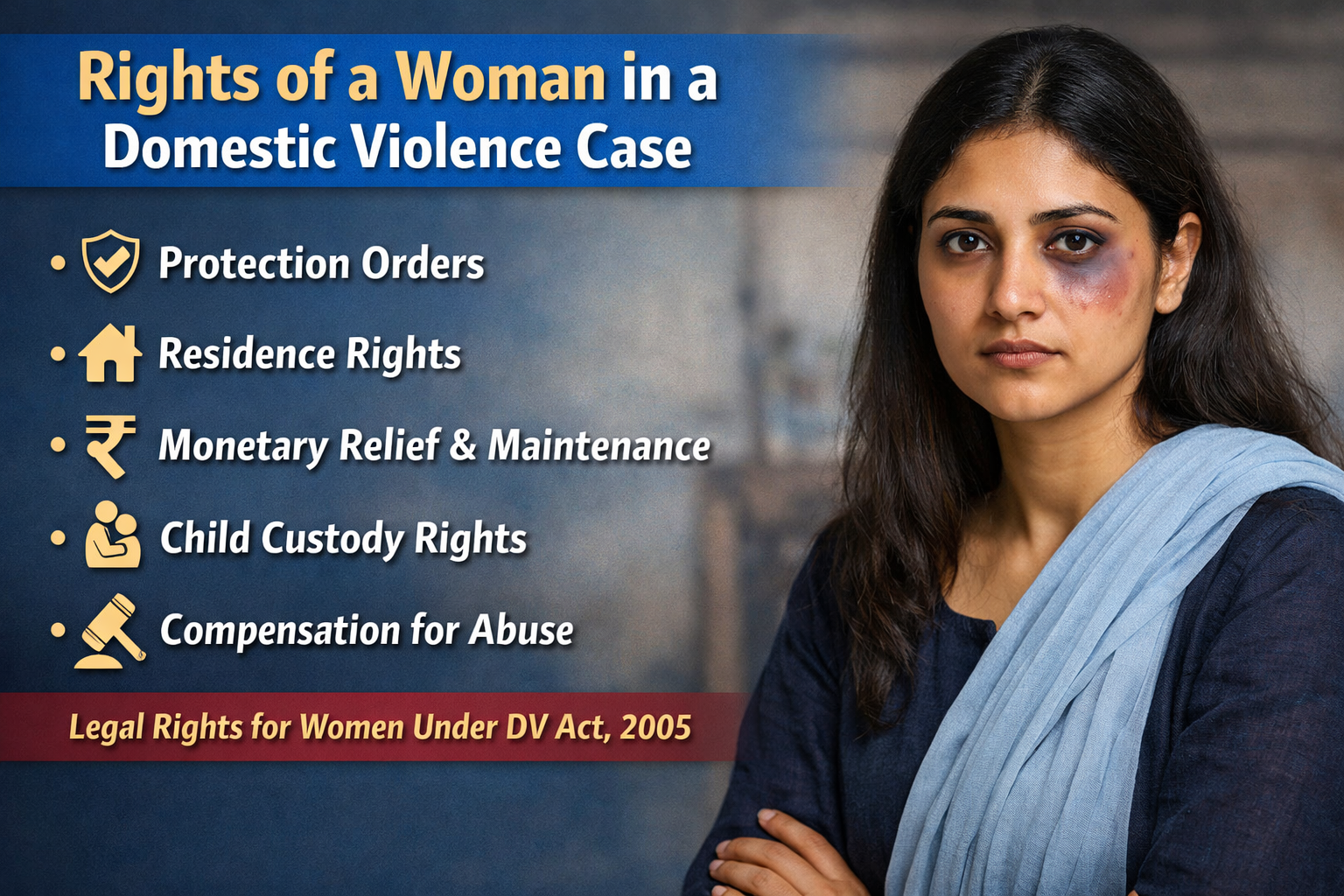
Right to Protection Order
One of the most significant Protection order rights DV Act provides is safety from further violence.
A Magistrate can issue a protection order restraining the respondent from:
- Committing any act of domestic violence
- Communicating with the woman
- Visiting her workplace or residence
- Threatening or intimidating her or her relatives
Violation of a protection order is punishable under law, making this a strong legal safeguard within the Domestic violence case rights India framework.
Right to Residence in Shared Household
The Residence rights of woman under DV Act ensure that a woman cannot be forcibly evicted from her matrimonial or shared household.
Key aspects:
- Woman has the right to reside regardless of ownership
- Husband or relatives cannot dispossess her
- Court may restrain the respondent from entering certain portions
- Alternative accommodation can be ordered if needed
This right protects women from homelessness and coercion, forming a core part of the Legal rights of women in DV case.
Right to Monetary Relief and Maintenance
The Maintenance rights under DV Act provide financial support to women facing economic abuse.
The court may order:
- Monthly maintenance
- Medical expenses
- Loss of earnings compensation
- Household expenses
These monetary reliefs are part of the Reliefs available to women under DV Act and are granted based on the woman’s needs and the respondent’s income.
Right to Custody of Children
The Custody rights of woman in DV case allow courts to grant temporary or permanent custody of children to the aggrieved woman.
Important points:
- Child’s welfare is paramount
- Interim custody can be granted
- Visitation rights may be regulated
- Courts prevent exposure of children to violence
This protection recognizes the psychological impact of domestic violence on children under Domestic violence legal remedies for women.
Right to Compensation for Mental and Physical Harm
Under the Compensation rights DV Act, a woman can seek monetary compensation for:
- Mental trauma
- Emotional distress
- Physical injury
- Reputational harm
Compensation is awarded independently of maintenance and reinforces the accountability of the abuser within the Protection of Women from Domestic Violence Act rights structure.
Right to Approach Court Without FIR
A crucial aspect of Rights of wife under DV Act is that:
- Filing an FIR is not mandator
- Woman can directly approach a Magistrate
- Protection Officer assistance is available
This ensures easy access to justice and avoids unnecessary procedural barriers.
Right to Interim and Ex-Parte Relief
Courts can grant immediate relief when delay may cause harm.
These include:
- Interim protection orders
- Ex-parte residence orders
- Emergency monetary relief
Such provisions strengthen Women rights under DV Act by prioritizing safety and urgency.
Protection Against Retaliation and Harassment
The DV Act prohibits:
- Retaliatory actions
- Forced compromise
- Threats after filing a case
Any violation strengthens the woman’s legal position and may attract criminal consequences, reinforcing Domestic violence case rights India.
Judicial Safeguards for Women
Indian courts have consistently held that:
- DV Act must be interpreted liberally
- Technicalities should not defeat justice
- Past violence can justify relief
- Likelihood of future abuse is sufficient
These principles enhance the effectiveness of Rights of woman in DV case.
Common Misconceptions About Women’s Rights in DV Cases
People maintain incorrect beliefs about the domestic violence legal system. The incorrect beliefs about domestic violence legal system rights which women possess their legal rights.
Myth 1: DV Act is only for married women
Reality: The DV Act also applies to women in live-in relationships and shared households.
Myth 2: Physical injury is mandatory
Reality: Domestic violence includes emotional, verbal, sexual, and economic abuse even without physical injury.
Myth 3: Arrest is automatic after filing a DV case
Reality: Arrest happens only in specific situations such as violation of a protection order or commission of a criminal offence.
Myth 4: Only criminal remedies exist under DV Act
Reality: The DV Act mainly provides civil remedies which include protection orders and residence rights and maintenance and compensation.
The reality is that the Domestic Violence Act women rights system is civil, preventive, and protective.
Importance of Understanding Rights of Woman in DV Case
Understanding the Rights of woman in DV case helps:
- Prevent continued abuse
- Ensure financial and residential security
- Protect children
- Restore dignity and self-respect
- Enable informed legal decisions
These rights reflect India’s commitment to gender justice and constitutional values.
Conclusion
The Rights of woman in DV case form the backbone of legal protection for women facing domestic abuse in India. The legal system provides women with protection through protection orders and residence rights and maintenance and custody and compensation which enables them to choose between safety and survival. The Protection of Women from Domestic Violence Act rights framework defines domestic violence as an extreme violation of human dignity while it offers powerful civil solutions to combat this issue.