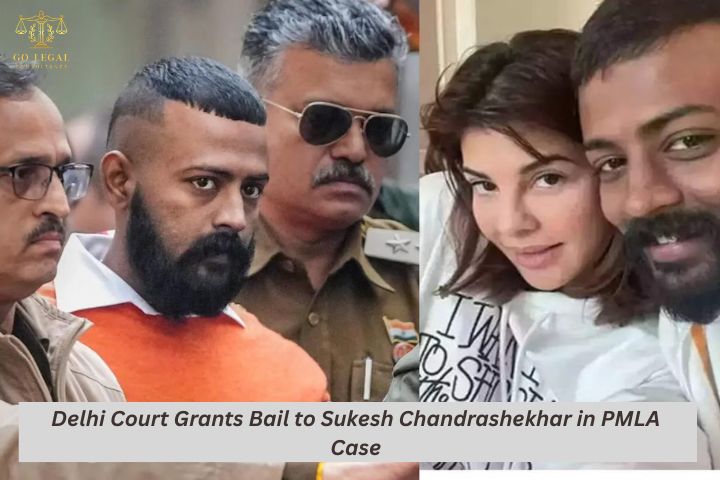
This case involves multiple agencies and courts across India through its investigation of a major financial crime and money laundering operation. The timeline below provides a detailed account of the case starting date and arrest date and which court managed the case and the latest bail information.
1. Initial Background (2015–2017)
- Sukesh Chandrashekhar already faced multiple cheating and fraud charges against him.
- The police arrested him for the Election Commission bribery case which involved the AIADMK symbol case.
- The authorities took him to Tihar Jail in Delhi after his arrest.
2. Alleged Fraud Network from Jail (2019–2020)
- While in custody, he allegedly:
- Made fake calls posing as government officials
- Used spoofed identities
- Contacted wealthy individuals
- Built a network targeting high-profile victims
3. ₹200 Crore Extortion Case Surfaces (2021)
August 2021 – Case Registered
- A case was registered by the Delhi Police Economic Offences Wing
- Victim: Wife of former Ranbaxy promoter Shivinder Singh
Allegation:
- He posed as a senior government official
- Promised legal help and extracted around ₹200 crore
4. Formal Arrest in This Case (2021)
August 2021
- Delhi Police (EOW) arrested Sukesh Chandrashekhar as the main suspect in the extortion case.
- The authorities treated his current jail sentence as a new arrest for this particular crime.
5. Entry of Enforcement Directorate (ED) (2021–2022)
- ED registered a case under Prevention of Money Laundering Act (PMLA)
- Actions taken:
- Financial trail investigation
- Attachment of properties
- Filing of prosecution complaint (charge sheet)
This converted the case into a money laundering prosecution
6. Courts Handling the Case
Main Court:
- PMLA Special Court (Rouse Avenue Court), Delhi
Nature of Court:
- Special court designated for money laundering cases
- Presided over by a Special Judge (PMLA)
Different judges may have handled hearings at different stages.
7. Evidence and Charges
Authorities alleged:
- ₹200 crore extortion racket
- Use of shell companies and accounts
- Purchase of luxury items
High-profile links:
- Actress Jacqueline Fernandez questioned in connection with gifts received
8. Judicial Custody Period (2021–2026)
- The accused remained in continuous custody
- Multiple bail applications were filed
- Bail was denied several times due to:
- Serious nature of offence
- PMLA’s strict bail conditions
9. Bail Granted
7 April 2026
- A Delhi Court granted bail to Sukesh Chandrashekhar
Legal Grounds:
- Long period of incarceration (approx. 4–5 years)
- Trial delay
- Completion of investigation
Bail likely granted by trial court / PMLA special court, depending on the specific proceeding.
10. Post-Bail Conditions
Typical conditions include:
- Mandatory court appearances
- No contact with witnesses
- Travel restrictions
- Cooperation with investigation
Quick Timeline Table
| Year | Event |
| 2017 | Arrest in Election Commission bribery case |
| 2019–20 | Alleged fraud network operated from jail |
| Aug 2021 | ₹200 crore extortion case registered |
| Aug 2021 | Fresh arrest by Delhi Police EOW |
| 2021–22 | ED files PMLA case |
| 2022–25 | Trial proceedings continue |
| 7 April 2026 | Bail granted by Delhi Court |
Key Legal Insight
- This is a multi-layered criminal case involving:
- Cheating
- Extortion
- Money laundering
- Important principle:
Bail does not mean acquittal
The trial is still ongoing, and final guilt will be decided by the court after evaluating evidence.
Conclusion
The case of Sukesh Chandrashekhar represents one of the most complicated financial crime cases in India which requires multiple agencies to work together for an extended period because of his high-profile connections. The case demonstrates the investigation and prosecution procedures for economic offences under current criminal law especially through the PMLA framework.