
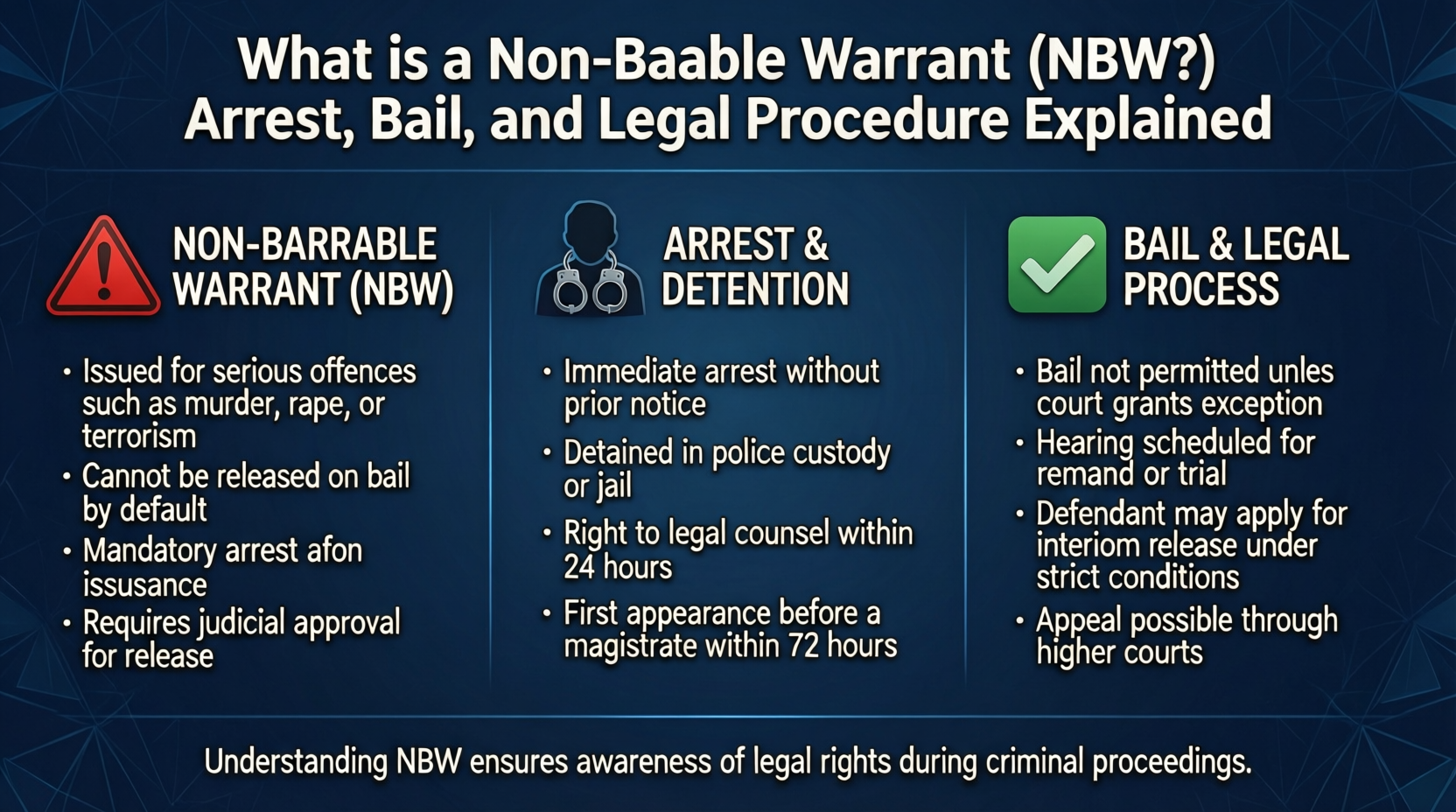
In the judicial system of India, a Non-Bailable Warrant (NBW) is a powerful legal instrument which can be used to guarantee the presence of an accused person before the court and to keep the judicial process going. NBW is often misinterpreted, and one of the common questions is whether it means the accused can never be released on bail? Or is it a direct order to send someone to jail? In this blog, we will explain the meaning, process, legal basis, and bail rules related to NBW in detail.
Definition of a Non-Bailable Warrant
A Non-Bailable Warrant (NBW) is an arrest warrant issued by a court when:
- The accused repeatedly fails to appear in court after receiving a summons,
- The accused ignores a Bailable Warrant, or
- The court believes that the accused may abscond or obstruct the investigation.
The primary purpose of an NBW is to compel the accused to appear before the court.
Important: NBW does not mean that bail is impossible. Bail under NBW can be granted, but only by the court, not by the police.
When is an NBW Issued?
Courts generally follow a step-by-step process before issuing an NBW:
- Summons – A notice is sent to the accused to appear in court.
- Bailable Warrant (BW) – If the accused ignores the summons, a bailable warrant may be issued. Police can arrest and grant bail immediately under BW.
- Non-Bailable Warrant (NBW) – If the accused continues to avoid court or is deemed a flight risk, the court may issue an NBW.
NBW is issued only when normal summons or bailable warrants are insufficient to ensure the accused’s appearance.
Legal Basis for NBW
NBWs in India fall under both the Code of Criminal Procedure (CrPC, 1973) and the BNSS, 2023 (Bharatiya Nagarik Suraksha Sanhita).
Under CrPC
- Section 70 – Magistrates have the authority to issue an NBW.
- Section 73 – Differentiates between bailable and non-bailable warrants.
- Sections 82–83 – Cover proclamations and attachment of property for absconding accused.
Under BNSS, 2023
BNSS replaced CrPC and provides clearer guidance for courts to ensure the presence of the accused:
- Section 35 BNSS – Arrest rules and rights of the accused.
- Section 36 BNSS – Mandatory communication of arrest.
- Section 43 BNSS – Right to meet a lawyer.
- Section 46 BNSS – Mandatory medical examination during custody.
NBW is a judicial order, whereas an arrest warrant primarily authorizes the police to detain the accused.
Process After NBW is Issued
- Police Arrest
- Once NBW is issued, the police can arrest the accused.
- The accused is produced before the magistrate immediately.
- Bail Consideration
- Under a bailable warrant, police can grant bail.
- Under NBW, only the court can decide on bail.
- Court Appearance or Surrender
- The accused must appear in court or surrender.
- If the accused absconds, the court may issue a proclamation and even order attachment of property.
Difference Between NBW and Bailable Warrant
| Feature | Bailable Warrant (BW) | Non-Bailable Warrant (NBW) |
| Bail | Police can grant immediately | Bail only by court |
| Severity | Less serious cases | Serious crimes or flight risk |
| Purpose | Ensure presence in court | Compel appearance in court |
| Procedure | Simple, police-controlled | Court-monitored, judicial discretion required |
Rights of an Accused Under NBW
Even after an NBW is issued, the accused has legal rights:
- Right to meet a lawyer (BNSS Section 43)
- Right to medical examination (BNSS Section 46)
- Right to present their case in court
- Protection against illegal detention (BNSS Section 58)
If there is any violence or unlawful treatment under NBW, the accused can approach the court for redressal.
How to Cancel or Challenge an NBW
The accused can take the following steps:
- Surrender/Appear in Court – Present themselves before the magistrate.
- File a Recall or Cancellation Petition – If there’s a valid reason for non-appearance (illness, incorrect address, lack of information).
- Apply for Bail – Court discretion applies.
- Seek Legal Aid or Human Rights Intervention – Assistance in protecting rights under NBSS/CrPC.
Proper legal advice is crucial, as NBWs can sometimes be misused.
Advantages and Precautions of NBW
Advantages
- Ensures the accused appears before the court.
- Strengthens judicial process.
- Helps prevent absconding and tampering with evidence.
Precautions
- Arrests under NBW must not be illegal.
- Accused rights must always be protected.
- Courts and police must maintain accountability.
Conclusion
A Non-Bailable Warrant (NBW) is an important tool in the Indian legal system. It allows courts to compel the accused to appear, while simultaneously safeguarding the rights of the accused and the judicial process.
The purpose of NBW is not punishment, but to maintain the integrity of the legal process. With timely legal action and court appearance, NBWs can be challenged, recalled, or bail can be granted.
NBW serves as a warning that the law is serious about court appearances, but the accused’s rights are always protected by law.
FAQs
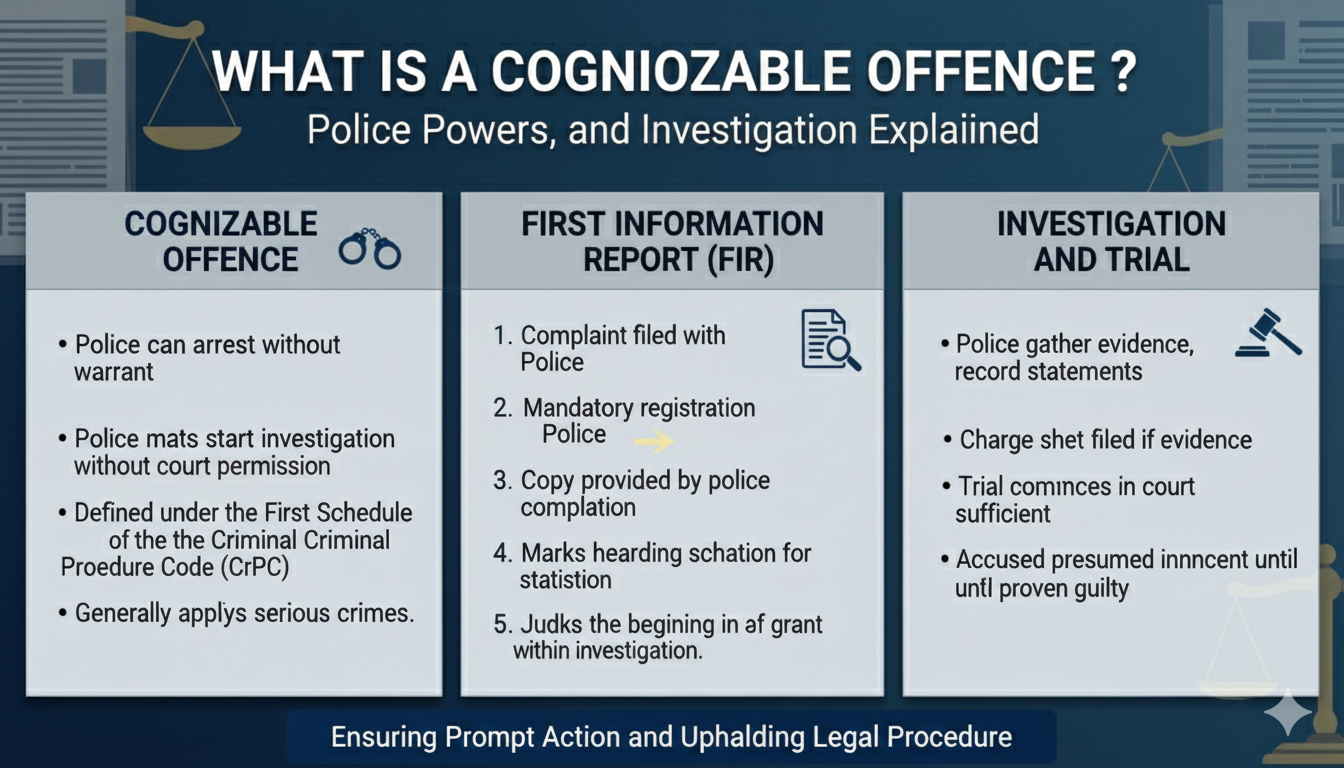
Q1. What is the difference between an NBW and an FIR?
- FIR is the registration of a complaint.
- NBW is a judicial order issued to ensure arrest and court appearance.
Q2. Does NBW automatically mean jail?
- No, bail may be granted by the court.
Q3. How long is an NBW valid?
- Until the accused is arrested or the court cancels it.
Q4. Can an NBW be appealed or challenged?
- Yes, under the relevant CrPC/BNSS provisions.